

Why This Matters to Distributors: Data center construction is increasing demand for wire, cable and conduit as manufacturers face production constraints. Longer lead times and uncertain costs make early purchasing, supplier coordination, and clear communication with customers increasingly important heading into 2027.
Data center construction is pushing up prices and extending lead times for electrical materials, while manufacturers may need 18 to 24 months to add production capacity, according to a new Border States report.
The electrical distributor’s “2026 State of Commodities” report identifies growing data center demand, copper supply constraints, trade policy, and transportation costs as pressures on material prices and availability heading into 2027. Border States released the report Oct. 12.
Demand is spreading beyond copper wire to aluminum wire, steel conduit, and polyvinyl chloride conduit. Suppliers cite data center projects as a major contributor to higher prices, increased purchasing, and longer delivery schedules, according to the report.
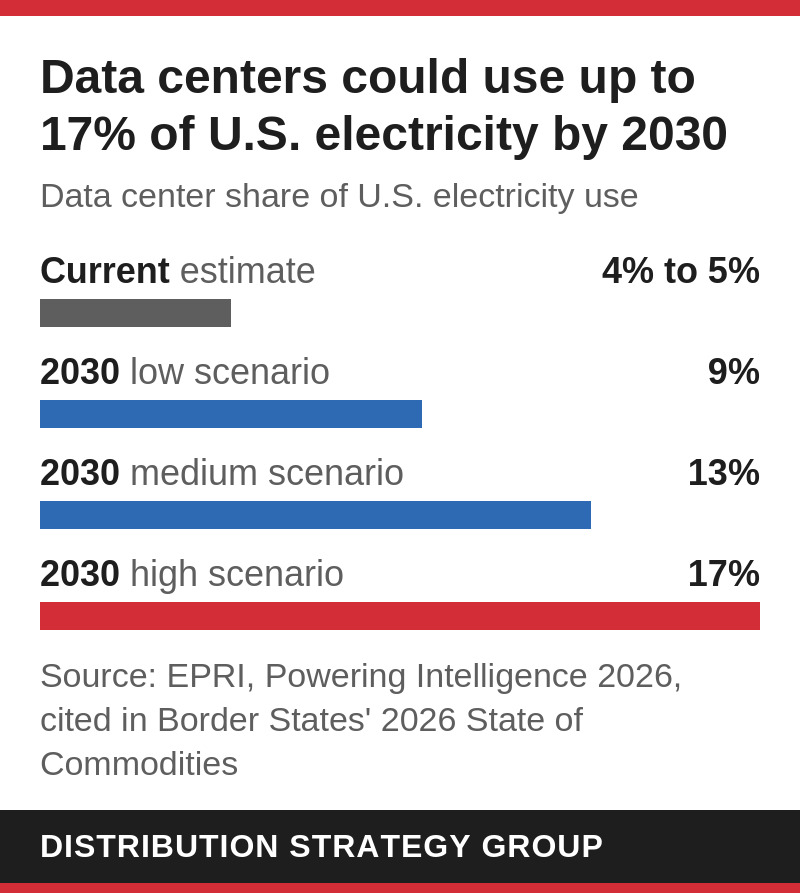
Manufacturing constraints are particularly pronounced for larger conduit. Four-inch to 6-inch PVC pipe and steel conduit take longer to produce than smaller sizes, reducing output as orders increase. Border States said multiple suppliers were already operating at maximum capacity for the year.
“Copper remains particularly exposed as data centers compete with electrification and other infrastructure investment for available supply,” said Dave Buddle, Border States’ strategic contractor and business development director.
Buddle said continued construction of large data centers would increase the importance of early procurement and coordination among project owners, contractors, distributors, and manufacturers in 2027.
Border States describes copper supply constraints as increasingly structural rather than temporary. Mining disruptions and declining ore grades at older mines restrict output, putting pressure on smelters and rod mills and limiting the industry’s ability to respond quickly to rising demand.
Copper is used throughout data center electrical infrastructure. Those projects also consume aluminum for electrical distribution and cooling systems, steel for structures and supporting infrastructure, and PVC for underground conduit.
Expanding production takes time. Ordering, installing, and bringing new equipment into operation can take 18 to 24 months, according to the report, creating a gap between increased demand and suppliers’ ability to fill orders.
Border States identifies capacity additions and supplier acquisitions as developments to watch next year. Local restrictions and lawsuits affecting data center construction could also change the timing and location of demand.
Trade policy is adding work and uncertainty throughout the electrical supply chain. Border States said changing tariff rates, exemptions and country-of-origin rules have complicated cost validation and documentation.
The company said it spent considerable time this year working with manufacturers, suppliers, and internal teams to understand those changes and limit their effect on customers.
“Without a doubt, tariffs have applied pressure on our cost to serve, and when combined with continued inflation in many areas of the business, 2026 has been a challenging year,” said Zach Kincaid, Border States’ vice president of procurement.
Kincaid said the company expects trade policy to remain fluid in 2027. The report identifies potential changes to U.S. Section 232 tariffs as another factor affecting copper, aluminum, and steel markets.
Commodity prices alone do not determine what distributors pay for finished products. Regional metal premiums, freight charges, and fuel surcharges also affect delivery costs, according to Border States.
Steel pipes, PVC pipes, and large cables are particularly sensitive to freight costs because they depend heavily on flatbed transportation. Driver shortages, aging equipment, and slow fleet replacement can further constrain shipping capacity.
The report identifies diesel prices, copper and aluminum futures, hot-rolled steel coil prices, and supplier lead times as indicators to watch in 2027. It does not provide a firm price forecast, citing continued uncertainty surrounding demand, production capacity, and trade policy.
Do not miss any content from Distribution Strategy Group. Join our list.
Share this article:
