
Distribution Events


Thought Leadership and Software for Wholesale Change Agents

-

Gulfstream Expands Parts Distribution Network as Inventory Investment Tops $3 Billion
The Savannah, Georgia-based company said that the investments are intended to improve parts availability and reduce the time aircraft spend out of service.
-

Distributor Reports to Test Strength of Demand Heading into Year-End
The central issue is whether customers are moving beyond essential purchases and committing to work that can sustain growth into 2027.
-

Builders FirstSource Details COO Handoff
Builders FirstSource has approved compensation for incoming chief operating officer Mike Hiller and will retain outgoing COO Steve Herron as an adviser through March 2027, according to an amended securities filing dated Oct. 16.
-

Wesco Opens Texas Center to Speed AI Data Center Installation
The opening comes as data centers generate substantial growth for Wesco.
-

Wajax Plans Management Reorganization, Targets Sales, and Service Investments
The plan sets priorities for a broader ambition to become Canada’s fastest-growing provider of industrial products, equipment, and services by 2031.
-

Amazon Business Expands Government Purchasing Access with County Cooperative Contract
The nationally solicited agreement gives counties access to more than 300 million products and hundreds of thousands of third-party sellers, according to NACo.
-

Provi Names New CEO to Expand Digital Tools for Beverage Distributors
Provi has named former Olo and Tock executive Matthew Tucker chief executive officer, succeeding founder Taylor Katzman as the beverage alcohol marketplace develops purchasing and sales tools for distributors and their customers.
-

Canadian Producer Prices Climb 10.5% Through August
For distributors buying Canadian-made products, the increases point to potential pressure on purchasing costs, depending on their suppliers, contracts and product mix.
-
Arrow Selects New Leader for Enterprise Computing Business
Arrow Electronics has selected Rodney Clark to succeed Eric Nowak as president of its Global Enterprise Computing Solutions business as Nowak prepares to retire after 22 years with the company.
-
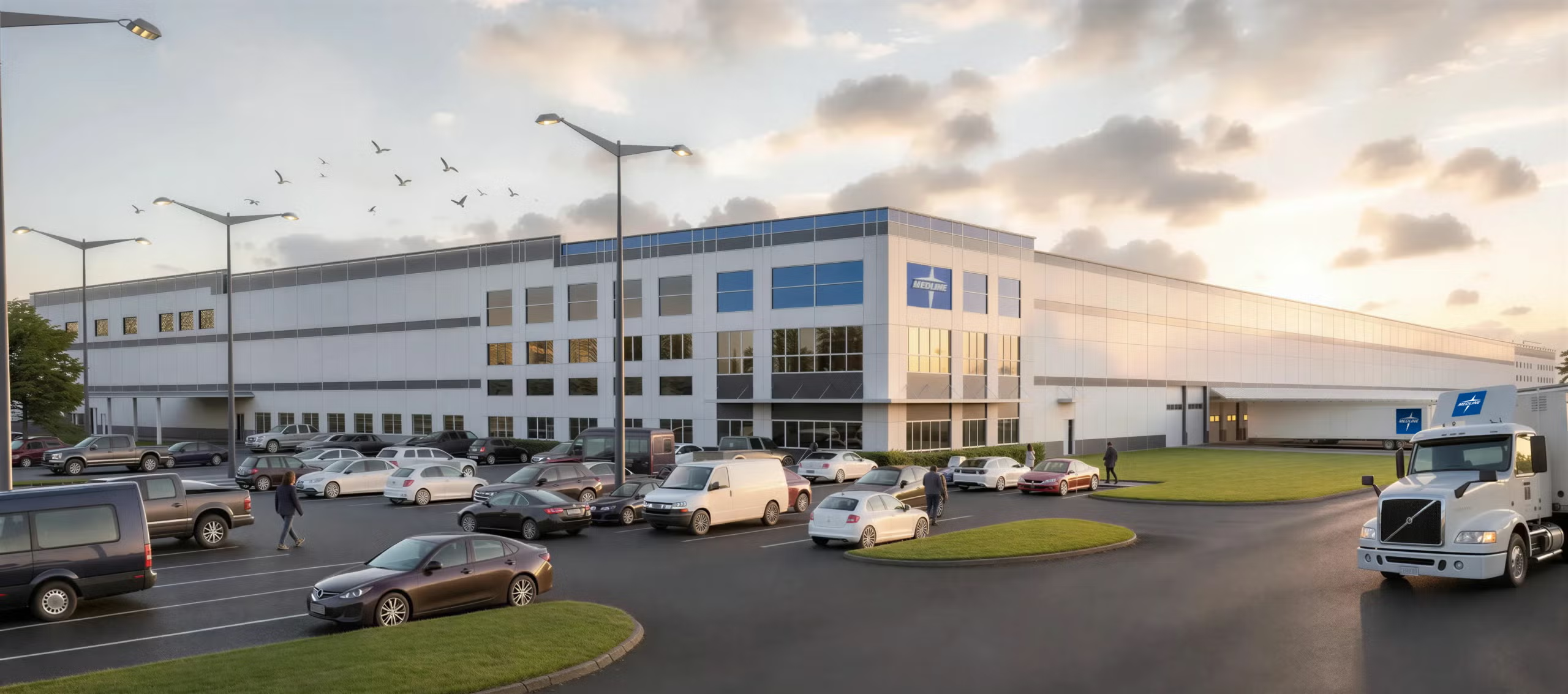
Medline to Add 800,000-Square-Foot Distribution Center in Michigan
Tom Reynolds, executive vice president of acute care, said the facility would expand capacity and operating flexibility in Michigan. He said the investment is intended to strengthen service to healthcare providers across the state and the broader Midwest.