


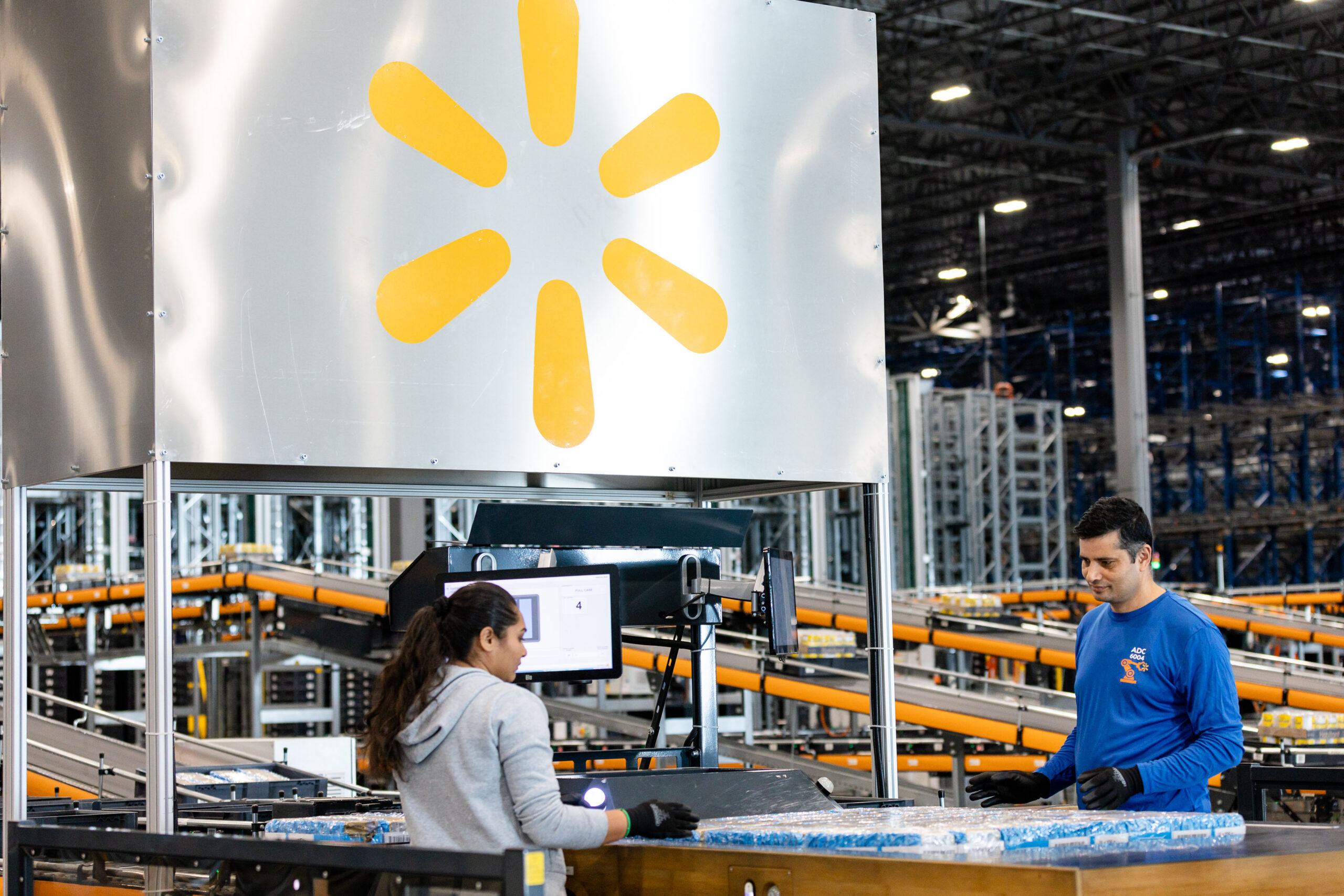
Why This Matters to Distributors: Walmart is investing billions of dollars in automated distribution and fulfillment centers while changing how suppliers ship inventory into its network and using artificial intelligence to improve replenishment. The initiatives show how one of the world’s largest supply chains is combining physical automation, transportation consolidation, and supplier data to move inventory faster and lower distribution costs.
Walmart is accelerating a broad overhaul of its U.S. distribution network that includes automated regional distribution centers, billion-dollar fulfillment facilities, consolidated inbound shipments from suppliers and artificial intelligence tools designed to identify inventory problems and trigger replenishment.
The latest development is at Walmart’s regional distribution center in Cullman, Alabama, where building permits valued at approximately $29.55 million are now issued as part of the retailer’s previously announced $350 million modernization of the facility.
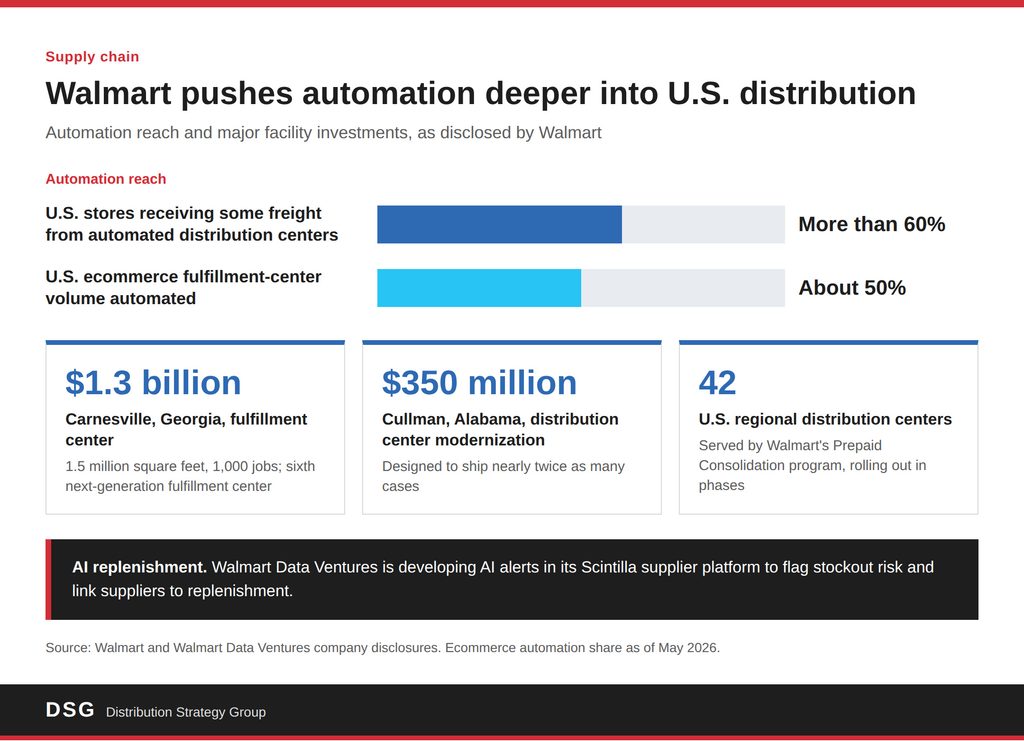
The Cullman project includes robotics, automation and software designed to increase the amount of merchandise the regional distribution center can process. Walmart has said the upgraded operation eventually will be capable of shipping twice as many cases as it could before the modernization.
The permit follows other construction work associated with the project, including permits valued at $44 million and about $17.3 million in 2024 and another valued at $2 million in May. Those amounts should not be added to Walmart’s $350 million investment because the individual permits are part of the larger modernization project and have not been established as additional spending.
Cullman is one piece of a much larger shift in how Walmart moves products through its U.S. supply chain.
The retailer said in May that its investments in U.S. supply-chain automation continue to expand. About half of Walmart U.S. ecommerce fulfillment-center volume was automated at the time. Walmart previously reported that more than 60% of its U.S. stores were receiving at least some freight from automated distribution centers.
Walmart is also adding another large automated facility to that network. The company announced in August that it plans to invest $1.3 billion in a 1.5 million-square-foot next-generation fulfillment center in Carnesville, Georgia. Construction is expected to begin in late 2026, and the facility is expected to create 1,000 jobs.
The Carnesville operation will be Walmart’s sixth next-generation fulfillment center. The facilities are designed to use automation and high-density storage to increase the volume of products Walmart can store and process while expanding same-day and next-day delivery capacity.
Walmart is changing more than what happens inside its warehouses. It is also playing a larger role in how suppliers move products into its distribution network.
In May, Walmart introduced its Prepaid Consolidation program for suppliers that traditionally arrange and pay for transportation into Walmart’s network. Participating suppliers can ship products under a single national purchase order to one location rather than managing shipments to multiple destinations. Walmart then consolidates the inventory and distributes it among its 42 U.S. regional distribution centers.
Suppliers can manage those shipments through Walmart or use approved third-party logistics providers C.H. Robinson, Hub Group and RJW Logistics. Suppliers pay a per-case rate covering handling at Walmart’s automated consolidation center and transportation from the consolidation operation to regional distribution centers.
Walmart said the system is intended to reduce transportation complexity, improve the consistency of inventory flowing into its distribution centers and get products onto store shelves faster. The program is being introduced in phases, with participation based on supplier volume and available capacity.
At the same time, Walmart is expanding the use of AI and its own data to help suppliers determine when and where inventory needs to move.
Walmart Data Ventures said this month that it is expanding Scintilla, its supplier data platform, into what the company calls a commerce intelligence platform. The system is being developed to give suppliers a more integrated view of sales, customer behavior and inventory while using AI to identify changes that require attention.
One example provided by Walmart illustrates the distribution implications. A supplier could be alerted through Scintilla that an item is at risk of going out of stock in 50 stores and then move directly from that information into Walmart’s replenishment system to send additional inventory. Walmart said future capabilities will also include personalized alerts and conversational AI using the retailer’s first-party data.
Taken together, the initiatives are changing several stages of Walmart’s supply chain at the same time. Suppliers can consolidate inbound shipments before products reach Walmart’s regional distribution centers. Automation is increasing the amount of inventory those distribution centers and fulfillment centers can process. Walmart’s data and AI systems are being developed to identify potential inventory shortages and connect suppliers more directly with replenishment decisions.
Walmart is also continuing to expand the physical network supporting those capabilities. In addition to Cullman and the planned Georgia fulfillment center, the company is developing a high-tech perishable distribution center in Belvidere, Illinois. Walmart and Constellation Energy said in June that the facility is part of the retailer’s continued expansion of its supply-chain operations.
For distributors, Walmart’s investments provide a large-scale example of how automation, AI, inventory data, and transportation can be connected rather than treated as separate supply-chain projects. Walmart is applying those technologies across the movement of products from suppliers into distribution centers, through the warehouse and to stores and customers.
Do not miss any content from Distribution Strategy Group. Join our list.
Share this article:
