


Why This Matters to Distributors: A distributor spending $1 million a year on local trucking would pay $107,000 more if its rates rose in line with the national benchmark and its shipment volume and mix held steady.
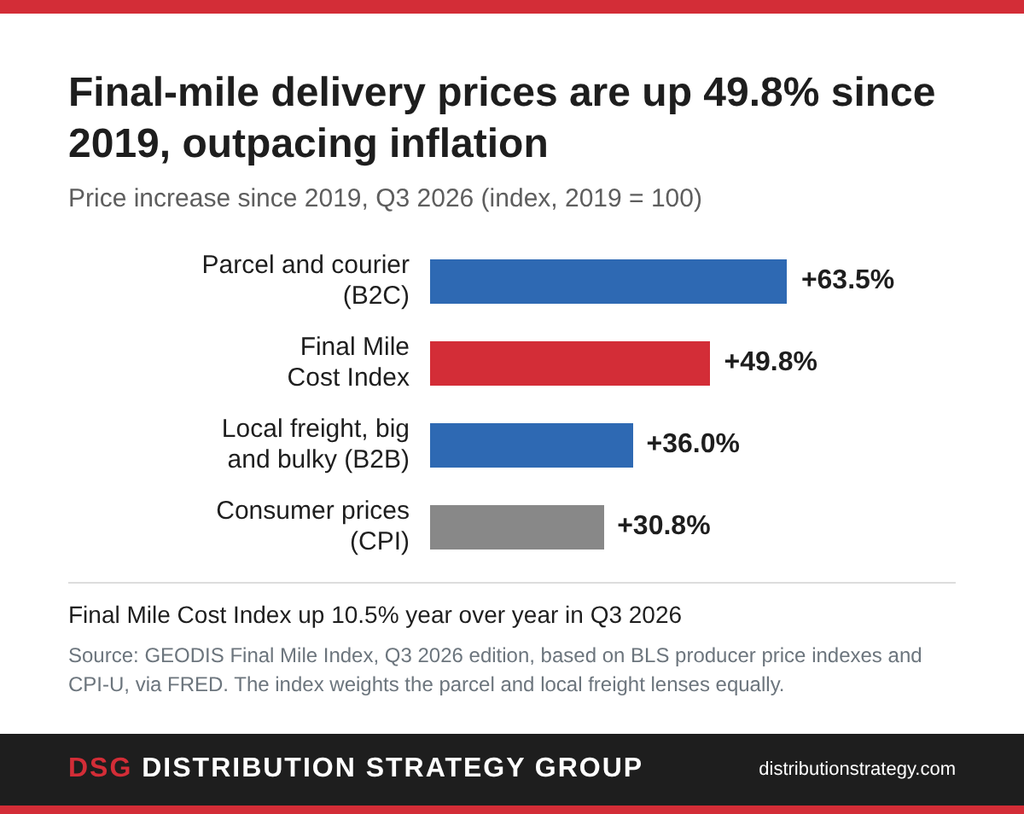
Wholesale distributors that hire carriers to move inventory between branches or deliver equipment and materials to job sites face higher trucking prices heading into 2027. U.S. local freight trucking prices rose 10.7% in the third quarter from a year earlier, surpassing their 2022 peak, according to the first U.S. Final Mile Index from logistics provider GEODIS.
Courier and parcel prices rose 10.2% year over year, adding pressure for distributors that ship smaller orders by parcel. The combined index climbed 10.5%, compared with a 3.5% increase in consumer prices. It reached 149.8 in the third quarter, up from 149.1 in the second, and hit a monthly record of 152 in September.
GEODIS builds the index from two equally weighted U.S. Bureau of Labor Statistics producer price measures, one for couriers and messengers and one for local general freight trucking. Both use 2019 as a baseline of 100. The two measures give distributors separate benchmarks for parcel shipments and truck deliveries of equipment, appliances, and building materials.
Diesel Added $278 to the Cost of 100 Gallons
U.S. retail diesel averaged $6.53 a gallon the week of Sept. 21, up from $3.75 a year earlier, according to U.S. Energy Information Administration data cited by GEODIS. At those prices, 100 gallons cost $653, compared with $375 a year earlier. Distributors running their own fleets paid the increase at the pump. Those hiring carriers can see it in fuel surcharges. GEODIS expects the index to stay above 145 in the fourth quarter as higher fuel costs and peak-season fees reach shippers’ bills.
The American Transportation Research Institute put the average cost of running a truck at about $2.34 per mile in 2025, up 3.4% from 2024. At that industry benchmark, a 100-mile route would cost about $234, or $23 per stop with 10 stops and $47 per stop with five. Driver wait times and return trips can push the cost of a completed delivery higher. That makes the number of stops on a route particularly important for distributors absorbing freight on small or rush orders.
In a separate FarEye survey cited by GEODIS, 70% of delivery operators named fuel as a major cost pressure, followed by driver cost and availability at 51% and vehicle operating costs at 40%. Forty-six percent said delivery costs were rising faster than revenue, and 42% said the two were rising at the same pace.
For distributors supplying big-box retailers, a late or incomplete shipment can trigger a charge as well as a return trip. Using Walmart’s 3% charge on the value of noncompliant cases, GEODIS calculated that a supplier shipping $100 million in goods annually could face $300,000 in charges if 10% of its shipment value were subject to the fee. The estimate excludes expedited freight, redelivery, and the cost of disputing deductions.
Verisk CargoNet recorded 677 cargo thefts across transportation modes in the second quarter, down 26% from a year earlier, while estimated losses more than doubled to $304.6 million from $135.7 million. In a separate dataset cited by GEODIS, Overhaul found that 37% of second-quarter theft incidents occurred at warehouses and distribution centers. The report points to refrigerated loads waiting for retailer appointments and high-value electronics changing hands between carriers as examples of where distributors’ freight can be exposed.
GEODIS released the index Nov. 18. The French third-party logistics provider, owned by SNCF Group, provides freight forwarding, warehousing and transportation services. It reported 2025 revenue of €10.6 billion (about $12 billion at the Federal Reserve’s average exchange rate for the year)
Do not miss any content from Distribution Strategy Group. Join our list.
Share this article:
