


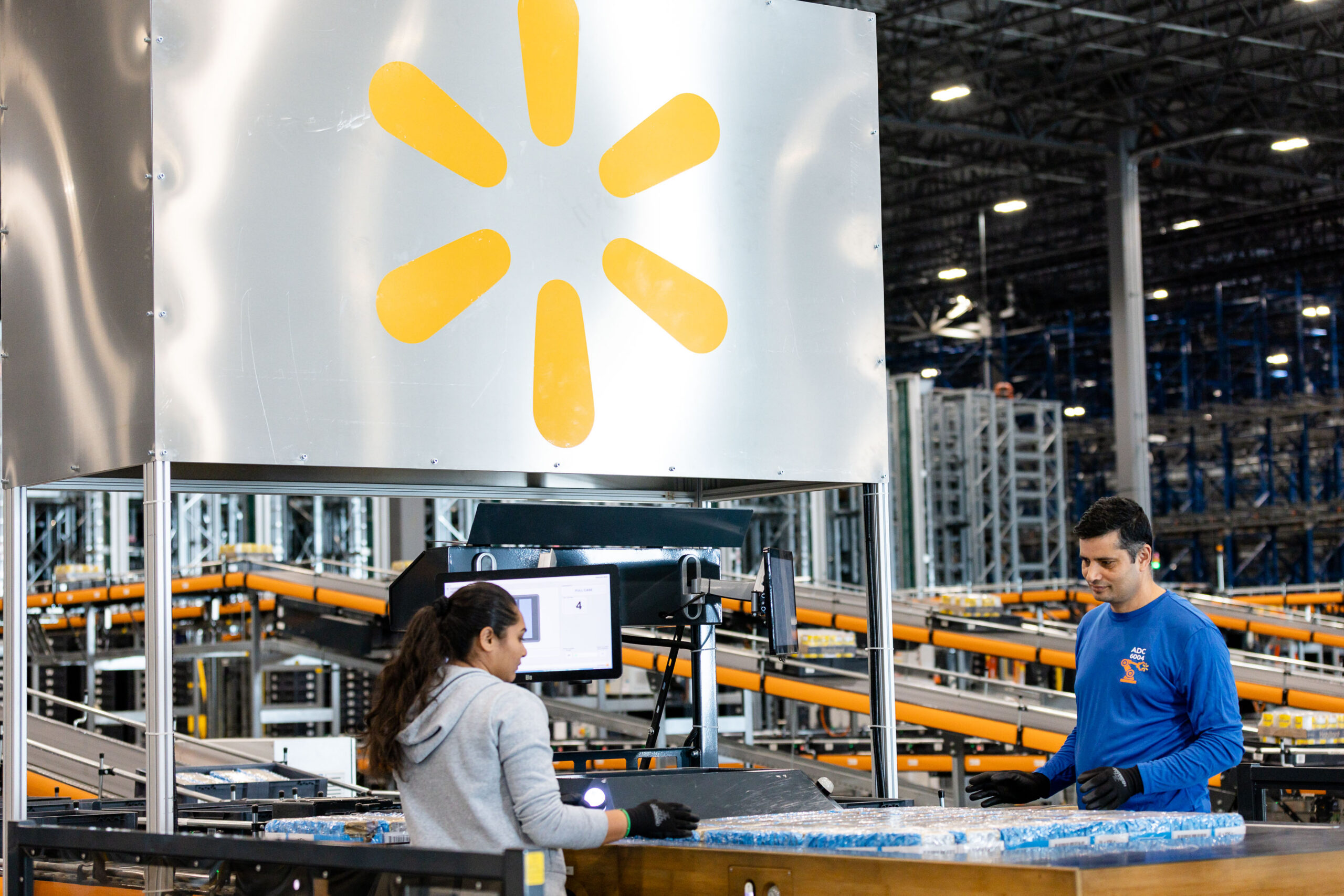
Why This Matters to Distributors: Walmart’s $6 billion commitment reflects the growing use of robotics and artificial intelligence in large distribution networks. The investment focuses on increasing warehouse capacity, improving inventory management and reducing the cost of moving merchandise. It also shows how major distribution operators are combining automation, software, and warehouse infrastructure to support both store replenishment and e-commerce fulfillment.
Walmart Inc. is committing approximately $6 billion over several years to expand warehouse automation at 25 U.S. regional distribution centers under an agreement with robotics and technology provider Symbotic Inc.
The deal expands a longstanding partnership as Walmart invests in technology to increase storage capacity, improve inventory management and move merchandise more efficiently through its distribution network.
The agreement includes additional automated material handling systems, robotics and artificial intelligence software designed to coordinate product storage, picking and movement. It also covers technology development and potential expansion into Walmart’s international distribution operations.
According to an Oct. 29 filing with the Securities and Exchange Commission, the $6 billion represents an initial commitment to purchase Symbotic systems and fund development programs at multiple facilities over several years.
The agreement includes $125 million for research and development of warehouse racking technology, picking systems, product movement, and inventory management capabilities. That amount is included in the $6 billion commitment.
Walmart and Symbotic did not disclose which distribution centers will receive the additional technology when installations will be completed or how much the investment is expected to reduce operating costs.
The expansion is intended to address several operating requirements across Walmart’s distribution network, including managing inventory for online orders, increasing storage capacity, and improving replenishment to stores.
Walmart said the additional systems will help it handle a broader assortment of merchandise while improving the speed and reliability of product movement through its warehouses.
“Our work with Symbotic over the years, including this expanded agreement, helps us improve service, grow capacity, simplify work for our associates and lower costs,” said Rob Montgomery, executive vice president of Walmart U.S. Supply Chain Operations.
The investment comes as Walmart continues expanding its use of automated systems to support store replenishment and e-commerce fulfillment.
Symbotic, based in Wilmington, Massachusetts, develops warehouse robotics and software that automate product storage, picking and movement. Its systems use artificial intelligence to coordinate robots and manage how merchandise moves through distribution facilities.
The company’s technology includes BreakPack, which supports picking individual products from cases, and SymMicro, a smaller automated fulfillment system designed for e-commerce operations.
Those capabilities allow distribution facilities to handle different order sizes and fulfillment requirements, including orders that do not require full cases of merchandise.
Walmart said the expanded systems will support inventory management upstream from e-commerce fulfillment operations, increase storage capacity and improve the flow of products across its distribution network.
The agreement extends beyond the purchase and installation of warehouse automation equipment.
According to Symbotic’s SEC filing, Walmart has committed to purchasing automated material handling systems for distribution and fulfillment facilities in the United States and selected international markets in the Americas.
The agreement also establishes terms for additional technology development, software licensing, system maintenance, and support services.
Walmart will pay fees for software licenses, maintenance, spare parts, and related services associated with the systems it purchases. Those fees are separate from the initial $6 billion commitment.
Symbotic said the agreement could add as much as $6.92 billion to its future order backlog, reflecting the potential value of the additional systems and development work.
The companies also may enter into further agreements covering additional automation systems and technology projects.
The SEC filing states that Walmart’s initial spending commitment cannot be reduced without written agreement from both companies, subject to specified termination provisions.
The new agreement builds on a relationship between Walmart and Symbotic that began more than a decade ago.
Symbotic has supplied warehouse automation technology to Walmart as the retailer has worked to increase distribution capacity and improve merchandise handling.
“Our partnership with Walmart started with a single product over a decade ago, and now we offer a full end-to-end solution to help power Walmart’s growth across its supply chain for years to come,” said Rick Cohen, chairman and CEO of Symbotic.
The expanded agreement comes as Walmart continues investing in regional distribution centers and fulfillment operations.
The retailer also is investing more than $330 million in a Louisiana regional distribution center, including robotics and automation intended to increase shipping capacity.
Walmart’s investments are part of a broader effort to improve how merchandise moves from suppliers through distribution centers to stores and customers.
The company has not disclosed how many additional robots will be installed under the Symbotic agreement or whether the new systems will affect employment at the 25 distribution centers.
Walmart’s agreement illustrates how large distribution operators are investing in technology to address warehouse capacity, inventory management, and order fulfillment.
For wholesale distributors, the investment is relevant because many face similar operating requirements, including managing larger product assortments, handling smaller orders, and improving inventory accuracy.
The systems covered by the agreement combine automated storage, robotic picking and software that determines how products move through a facility.
Such technology can reduce manual product handling and allow warehouses to store more merchandise within existing space, although the financial benefits depend on the operation and the cost of installation.
Walmart has not disclosed projected labor savings, productivity improvements, or the expected financial return from the expanded agreement.
The scale of the commitment also reflects the difference between automation investments at large national distribution networks and those at smaller regional facilities, where installation costs and order volumes may affect the business case.
For now, Walmart’s agreement establishes a multiyear investment in warehouse automation across 25 U.S. distribution centers, with additional spending possible as the companies develop and deploy new systems.
Do not miss any content from Distribution Strategy Group. Join our list.
Share this article:
