


AI, Tech, & Digital Commerce
-
The AI 25’s Gold Tier Offers Distributors a Practical Roadmap for AI
The companies in the Platinum, Gold and Silver tiers have demonstrated what DSG classifies as “Integrated” AI capability — production deployments with measurable business impact rather than pilots, partnerships, or announcements alone.
-

Ferguson Says AI Data Center Boom Is Driving Distributor Growth
For Ferguson, the immediate AI opportunity is not primarily the technology itself. It is the physical infrastructure required to support AI computing.
-

Henry Schein Recasts Its Future Around AI, Simpler Leadership and Faster Execution
Henry Schein joins a growing list of distributors, including W.W. Grainger, Sysco, and DNOW, that are embedding AI into customer-facing applications and internal operations to improve productivity, automate routine work, and strengthen customer relationships.
-

InstaLILY Hires Former Association Executive to Lead Distribution Expansion
In his new role, Adam Isenberg will lead InstaLILY’s engagement with distributors, deepen industry partnerships, and support the company’s continued expansion across the wholesale distribution market.
-

DSG’s Atlanta AI Forum to Showcase How Leading Distributors Are Scaling AI
The DSG regional event will provide attendees with practical insight from distributors that are actively integrating AI into sales, operations, and customer service rather than simply evaluating the technology.
-
AI Top 25 Benchmark Reveals Six Habits Separating Distribution’s AI Leaders
The companies that made the AI Top 25 distinguished themselves not by the software they bought, but by how they organized their businesses.
-
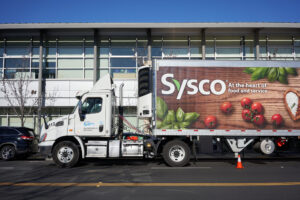
Sysco Bets on AI to Drive $100 Million in Productivity Gains
Sysco’s announcement reflects a broader trend among large distributors to expand AI beyond customer-facing applications and into supply chain, logistics and back-office operations, where productivity improvements can have a greater impact on profitability.
-
Wesco Expands Beyond Distribution as AI Infrastructure Reshapes Growth Strategy
Wesco emphasized that the company’s strategy is evolving from supplying products into data centers to supporting the entire AI infrastructure ecosystem.
-

Home Depot Reorganizes Leadership to Accelerate Pro Growth, AI, and Unified Commerce
The restructuring further aligns Home Depot’s retail and distribution operations following its acquisitions of SRS Distribution and HD Supply.
-
Watsco Expands Through Acquisition, Accelerates AI Investment as HVAC Market Stabilizes
Watsco said it has invested more than $250 million in digital technology over the past five years, including customer-facing applications, internal operating systems, and emerging AI capabilities.