

Ingram Micro just told Wall Street its customers’ AI agents can place orders directly. The rest of distribution should read that as a channel announcement.
Bottom line: Ingram Micro’s third-quarter call put a number on something most distributors still treat as hypothetical. Customers whose AI agents connect directly to Ingram’s platform are growing their business with Ingram at four times the rate of customers who don’t. The buyer’s agent is becoming a storefront. I’ve been on the other side of a channel shift, pushing customers toward the channel the company needed. This time the customer is doing the pushing, and if your product data, availability, and pricing can’t be read by that agent, you are not in that store.
The Question We Never Asked
In the early days of Grainger.com, the mandate to the sales team was simple: convert customers to ordering on the website, as fast as you can and as many as you can. Salespeople got incentives for it. CSRs got training on it. The site needed to work, it needed to be seen working, and the race to digital dominance was on.
Nobody ever asked the customer how they wanted to order.
We put the burden on them to order the way we wanted them to. Sometimes that meant a salesperson talking a customer into typing an order online, when the customer would have preferred to order the way, they always had, to “help them out.”
None of that was an effort to play with the numbers. The company believed, and I believed, that the website was going to be a better and faster experience for the customer. The belief was sincere, and over time it was mostly right. But it was our belief about the customer’s experience, formed without asking the customer, and the mandate ran on it.
We got to a better place eventually. Customers had channels, they chose among them, and the pressure stopped. But I remember the sequence, and I remember why it happened. The company needed the website to succeed, so the company’s preference became the customer’s assignment.
I’m starting there because the agentic commerce news out of Ingram Micro this week is the same question turned around. Back then the distributor picked the channel and leaned on the customer to use it. Now the customer’s agent picks the channel, and the distributor who answers “use our website” will find nobody arguing. The agent orders somewhere else.
The Numbers Ingram Put on the Table
On October 29, Ingram Micro reported third-quarter net sales of $15.2 billion, up about 21%. For distributors outside technology, the operating detail matters more than the beat.
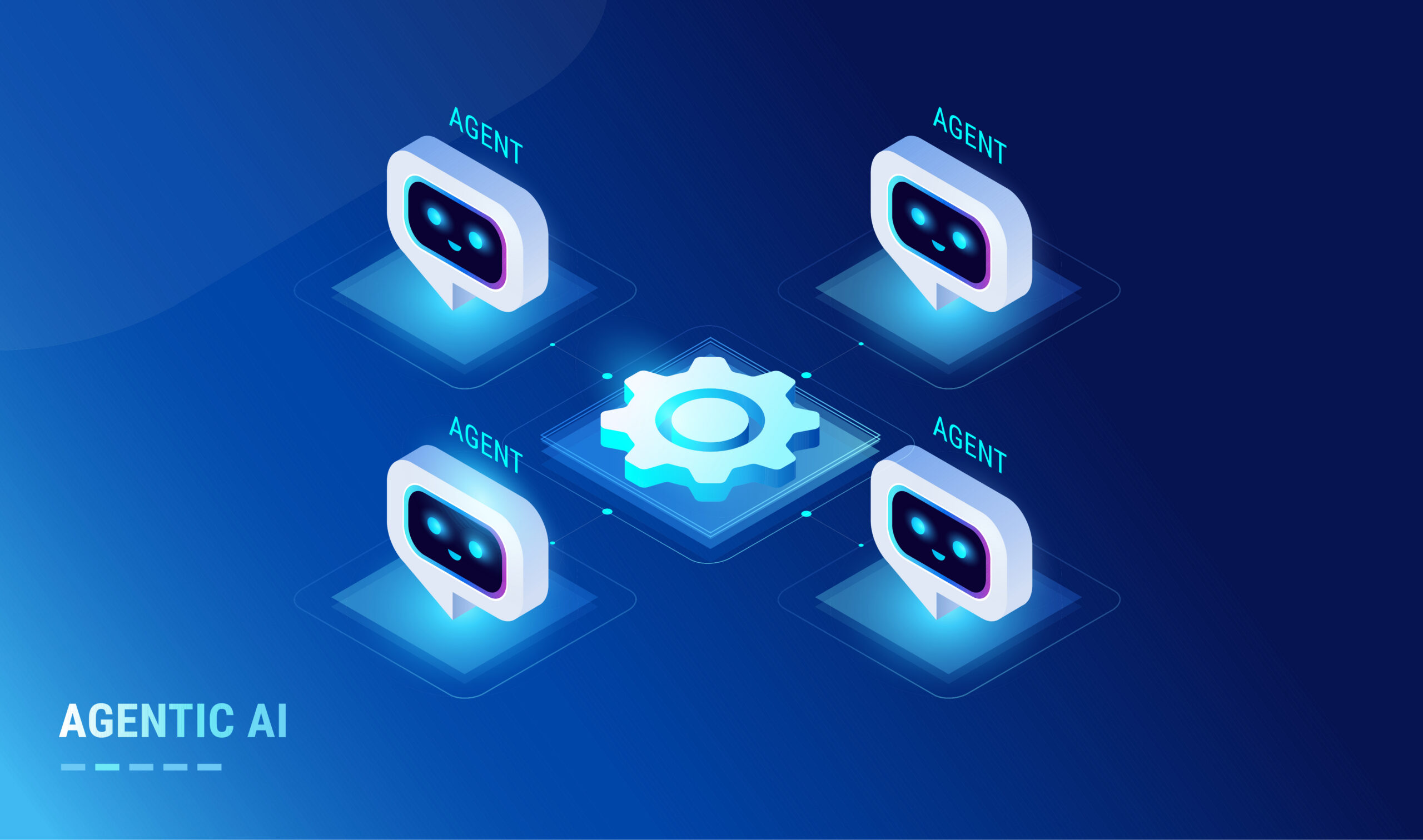
CEO Paul Bay said Ingram launched ordering through Model Context Protocol, an open standard that lets AI assistants connect to outside systems, in 12 countries during the quarter. Customers can now transact through ChatGPT, Claude, Gemini, Copilot, or through agents they’ve built themselves, with those agents connected into Ingram’s Xvantage platform. Bay’s line for it: this is the shift from digital commerce to agentic commerce, where intelligence moves from insight to action.
Then he gave the figure that matters. Customers actively using MCP are growing their business with Ingram at four times the rate of customers who aren’t integrated. That is Ingram’s claim about its own book, reported on its own call, and I’d treat it that way. It is still the first hard growth differential I’ve seen a distributor of any kind attach to agent-based ordering.
The rest of what Bay reported runs the same direction. Self-service is 70% of Ingram’s orders, up more than ten points in a year. Email-to-order volume, where a customer sends a PO or a parts list by email and the platform reads it and places the order, rose 33% and processed about $1.6 billion in revenue. Average revenue per Xvantage customer rose 39%.
Bay also laid out three priorities for Ingram’s AI business: reselling and managing customers’ consumption of AI services; attaching professional services for deployment, governance, adoption, and operations; and building new services around AI agents, including custom agents for small and midsize customers. His framing for channel partners was that they don’t need to build an AI practice before they can sell an AI project. Ingram supplies the capability. The partner keeps the customer.
Agentic Commerce Is a Channel Decision
Here’s the quiet assumption I hear in most distributors I talk to: our customers buy from people. They call the branch, they email their rep, a few of them use the site. An AI agent buying cutting tools or PVC fittings is a technology-distribution problem, and it’s years away for us.
Ingram just reported that the behavior already exists and that it compounds. Once a customer’s agent can read a supplier’s catalog, check availability, and place the order, the customer’s loyalty attaches to whichever supplier made that possible. The agent has no relationship with your rep. It has a connection to your data, or it doesn’t.
Ingram’s results are the supply side of that shift. Forrester published the demand side the day before the call. In its 2027 B2B predictions, released October 28, Forrester analyst Barry Vasudevan wrote that agentic buying will play a role in 75% of B2B purchases. Buyers will use agents, through their procurement systems or on their own, for bounded tasks: spend analysis, contract-renewal analysis, supplier discovery, RFI and RFP creation, and information gathering. Forrester expects fully autonomous purchasing to stay concentrated in high-volume, low-risk, repeatable scenarios, with agents often stopping just short of completing the transaction.
Read that list from a distributor’s chair. Supplier discovery and information gathering are the steps where a buyer decides who makes the shortlist. If the agent does those and a human clicks buy, the storefront still moved. The human is signing for a decision the agent already made. And the one category Forrester expects agents to complete on their own, high-volume, low-risk, repeatable purchases, is a working definition of MRO replenishment. That is most of what a distributor’s inside sales rep or customer service team handles today.
That is a channel question. Which customers reach you through which path, what each path costs to serve, and what happens to share when a new path opens. Most distributors have filed it under IT, next to the website refresh and the ERP upgrade. Filed there, it waits behind both.
I watched this from the other side at Grainger. We pushed customers toward a channel because we believed it was better for them and the company needed it to win, and we could do it because the customer had nowhere else to go for the same breadth and service. The agent shift removes that condition. The push now comes from the customer’s side of the table, and the customers who move won’t ask permission and won’t come back. Agent ordering belongs in the sales operating review, with an owner who carries a number, ahead of the quarterly technology update.
Email Was the Warning Shot
Set the agent number aside for a moment. The Ingram figure that should bother distributors most is the email number.
A third more email-to-order volume in a year, worth $1.6 billion, at a company that has spent a decade and serious money building a web platform. Those customers had a perfectly good website available. They sent an email instead, because the email came out of their own system and the website required them to go somewhere and type.
Every distributor I know has the same pattern. A large share of orders arrives as an emailed PO, a photo of a handwritten list, or a spreadsheet attachment, and a person at a desk keys it into the ERP. Read that as the customer telling you where the order originates: inside their workflow. Not yours. It’s the answer to the question we never asked at Grainger, delivered without anyone having to ask it.
An AI agent is the same behavior with the typing removed. A plant planner’s agent reads her maintenance system, decides what to order, and goes looking for a supplier it can transact with. Ingram built email-to-order first and agent ordering second because they are the same problem at two levels of automation. The distributors who automated email intake over the last two years are closer to agent readiness than they think. The ones still keying emails by hand are two steps behind, and the second step is arriving before they’ve taken the first.
Three Moves That Scale Down
Ingram’s three priorities translate to a $300 million or a $1 billion distributor more directly than the dollar figures suggest.
Sell what the agent can buy. Ingram resells and manages AI consumption. Your version is simpler: make your core catalog readable to a buyer’s agent. Clean product data, live availability, and customer-specific pricing, exposed through a secure connection. The agent will buy what it can see. The part of your catalog with incomplete attributes is invisible to it.
Attach the service your people already give away. Ingram attaches deployment, governance, and adoption services to AI sales. Your inside sales veterans do a version of this every day for free. They catch the wrong part number, they know the plant on Route 9 standardized on the metric version, they substitute before the customer knows there’s a stockout. An agent will place a clean order fast and a wrong order just as fast. The distributors who turn that catch-and-correct work into an explicit service, priced or protected in the contract, keep the margin that agents would otherwise strip out.
Build the agent for the customer who won’t. Ingram is building custom agents for small and midsize customers who can’t build their own. Most of your accounts sit in that range. A reorder agent for a 40-person contractor, running on their job schedule and your catalog, is a retention tool no competitor’s website matches. Build it, and you own the connection.
Information Has to Become Context
The integration is the easy part. The hard part is context.
The agent has information: the SKU, the price, the quantity on hand. Your 22-year inside sales rep has meaning. This plant’s purchasing manager rejects anything other than the OEM brand. Their line 4 is down for retooling until November, so the usual order is wrong this month. The “same as last time” order from this customer was itself a mistake last time.
An agent that connects to your system gets the first set. It never sees the second unless you’ve written it down somewhere the system can read. Most distributors haven’t. That knowledge lives in the heads of people who are retiring at a steady clip, and the agents arriving now will optimize the shelf without it.
This is why the move to agentic ordering is an organizational project before it is a technical one. The companies that will do well treat their veterans as the source of the context that makes the data worth connecting, and they capture it in account notes, substitution rules, and standard work before the agent shows up to read them. Bay cited more than 400 AI and machine learning models and about 250 million data events a day. Your advantage is that you know your 200 best customers better than any model does. In the same report, Vasudevan predicts buyers will double their human interactions to validate what their agents recommend. The person they call is the one who knows line 4 is down. That advantage expires the day it stays in someone’s head.
What Changes Monday Morning
Agents won’t fail you. They’ll work, for the supplier whose data is readable, and route around everyone else without anyone noticing. A buyer’s agent doesn’t send a lost-sale report. It stops asking. The first sign in your numbers will be a slow decline in order frequency at accounts where the relationship felt solid. Your rep will say the customer’s been quiet. The customer won’t be quiet. The customer’s agent will be placing the same order somewhere else.
Four things, in order.
1. Run the agent test yourself. Have someone on your team point ChatGPT or Claude at your public catalog and try to find a part, confirm availability, and place an order the way a customer’s agent would. Most distributors will discover there is nothing there to buy. That result is your baseline.
2. Move agent ordering out of the IT backlog and into the sales operating review. Give it an owner with a channel-mix number. Track orders by origin: phone, counter, email, web, and now agent. If you can’t separate email-keyed orders from true web orders today, that reporting fix comes first.
3. Pick the ten accounts most likely to go first. They’re the ones already sending structured POs by email, with a procurement or maintenance system behind them. Ask them the question we skipped at Grainger: how do you want to order? Then ask whether an AI assistant is building any of those orders yet. Ingram’s partners that integrated first grew fastest. Find yours.
4. Start the context capture. Have your top inside sales people write down, for those ten accounts, the five things they know that the system doesn’t. Substitutions, brand rules, delivery quirks, the person to call when the PO is wrong. Put it where the system can read it. That is the service an agent can’t replicate and the margin it can’t strip.
The question I’d put to any distribution leadership team this week: when your customer’s agent shops, what does it see from you?
If you’re working through agent ordering, email-to-order automation, or where the buyer’s attention is going in your markets, this is the ground we cover at the Applied AI for Distribution Conference in Chicago. Details at appliedaifordistributors.com.
Share this article: