It won’t be long before customers’ AI purchasing agents will be communicating directly with distributors’ AI sales agents, says keynoter Trent Gillespie.
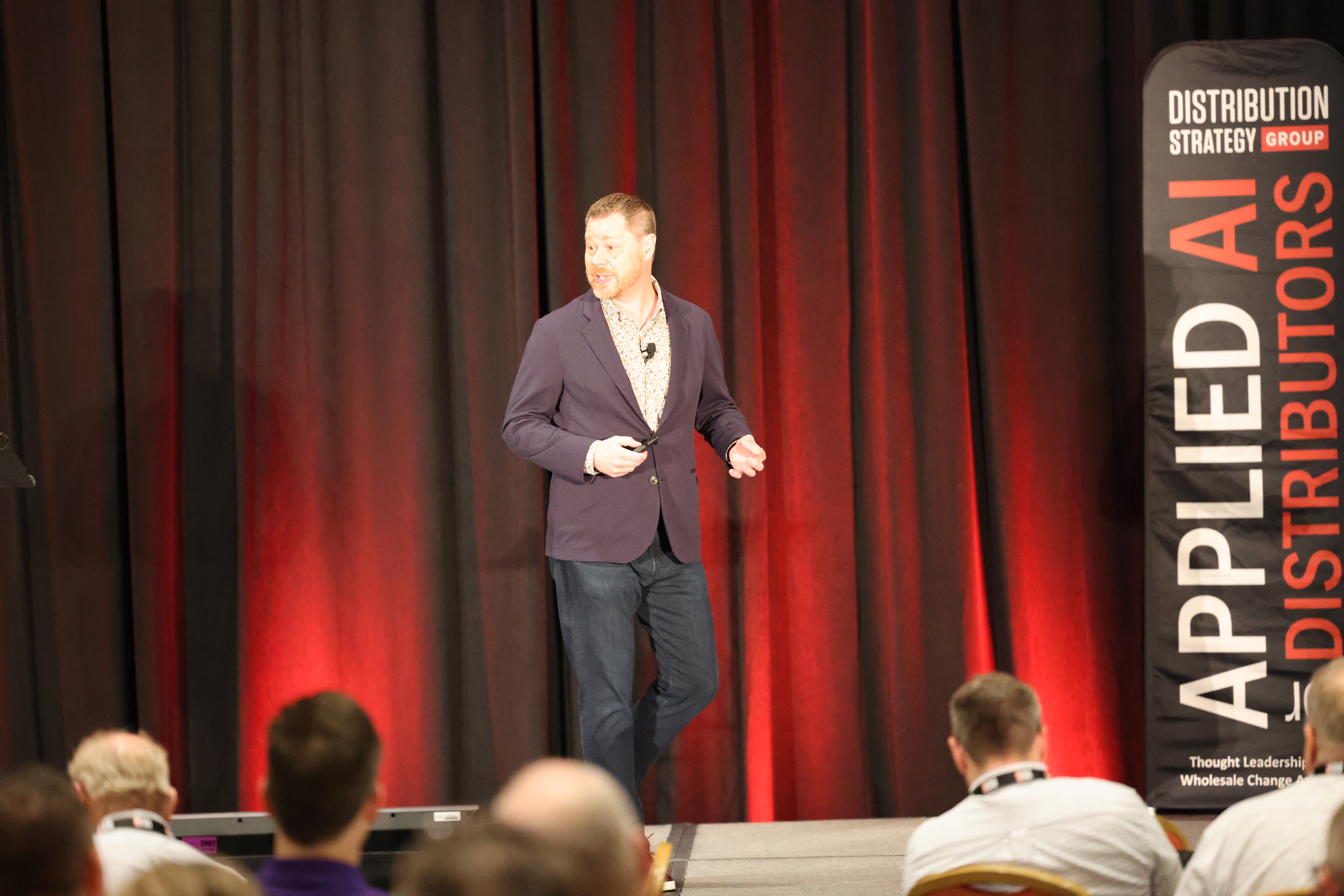
Trent Gillespie will detail approach to AI in a keynote entitled “Designing an AI-enabled business” at Distribution Strategy Group’s Applied AI for Distributors conference.
It won’t be long before customers’ AI purchasing agents will be communicating directly with distributors’ AI sales agents, says keynoter Trent Gillespie.
Trent Gillespie will detail approach to AI in a keynote entitled “Designing an AI-enabled business” at Distribution Strategy Group’s Applied AI for Distributors conference.
It won’t be long before customers’ AI purchasing agents will be communicating directly with distributors’ AI sales agents, says keynoter Trent Gillespie.
Trent Gillespie will detail approach to AI in a keynote entitled “Designing an AI-enabled business” at Distribution Strategy Group’s Applied AI for Distributors conference.