


In 2023, Distribution Strategy Group asked me to lead their annual State of Distribution Sales webinar. At the time, I was vice president of sales effectiveness services at SPARXiQ, and part of what we did for clients was built on a partnership with Objective Management Group (OMG), which provides sales force diagnostics and competency-based hiring assessments.
To give you some context, OMG’s data goes back more than 30 years, and the assessment is independently validated on a regular basis. Their newest validity study, run across more than 3,000 salespeople, is their largest yet (read more here). No assessment is perfect; human behavior is too complex for that. But OMG earns the confidence its clients put in it, and it’s the best sales assessment I’ve seen in my 30+ year career.
Here’s why that’s important. As a partner, I had access to run reports against OMG’s database and slice the data multiple ways. That access gave me an idea for the webinar: pull ten years of competency data for salespeople assessed in Wholesale Distribution, then query the same ten-year window across every vertical OMG measures. This would allow me to report how distribution compared.
- Worth flagging: the “all verticals” comparison group includes distribution sellers too. I couldn’t isolate them out. If I could have, the gap you’re about to see would likely be wider.
What I found wasn’t flattering. Distribution lagged the broader market, though not because of mindset or coachability. Sellers were willing, and open to coaching. The gap was in the selling competencies themselves, the trainable, coachable stuff. I built that into the 2023 webinar, along with what distribution leaders could do about it.
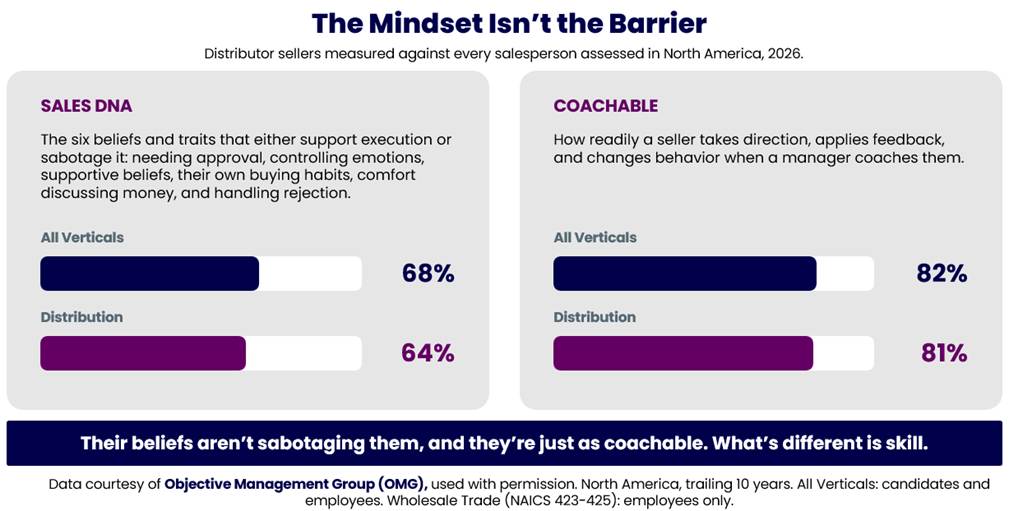
Fast-forward to 2026. DSG invited me back to present another State of Distribution Sales webinar. I was hopeful going in that the data might have improved for distributors, but not particularly optimistic. Many distributors don’t invest in sales enablement or sales training in a way that materially moves performance, and three years is roughly the window it takes a large sales force to carry a methodology from adoption to mastery, if the investment is there. So, I reran the comparison, this time able to line 2023 up against 2026 using the same methodology.
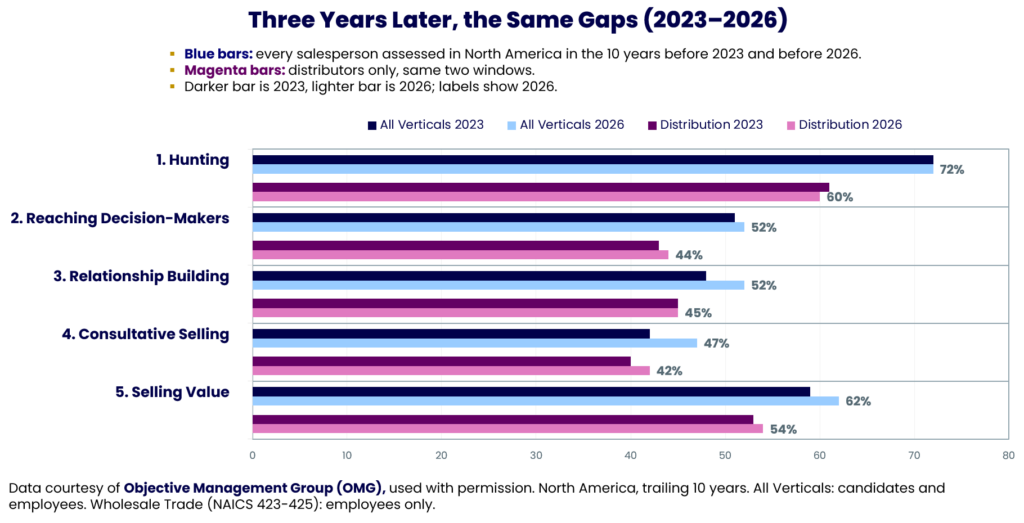
Almost nothing had moved.
The Five Big Skill Gaps
There’s a lot more detail in the analysis, but the short story is this:
Five selling competencies separate distributor sellers from the broader market by the widest margins, and each one has a predictable pattern behind it.
Average sellers do average things. The top 4%—the elite performers OMG’s data identifies at the very top, and the same kind of performer I’ve spent sixteen years studying in my own top-performer analyses—are far more deliberate and nuanced. Here’s what I’m calling “the five big skill gaps”:
- Hunting: Most sellers open a prospecting call, email, or meeting leading with their company, their catalog, their price. The top performers lead with a problem a similar buyer already had, the outcome they helped that buyer reach, a brief mention of how, then a check for relevance before going any further.
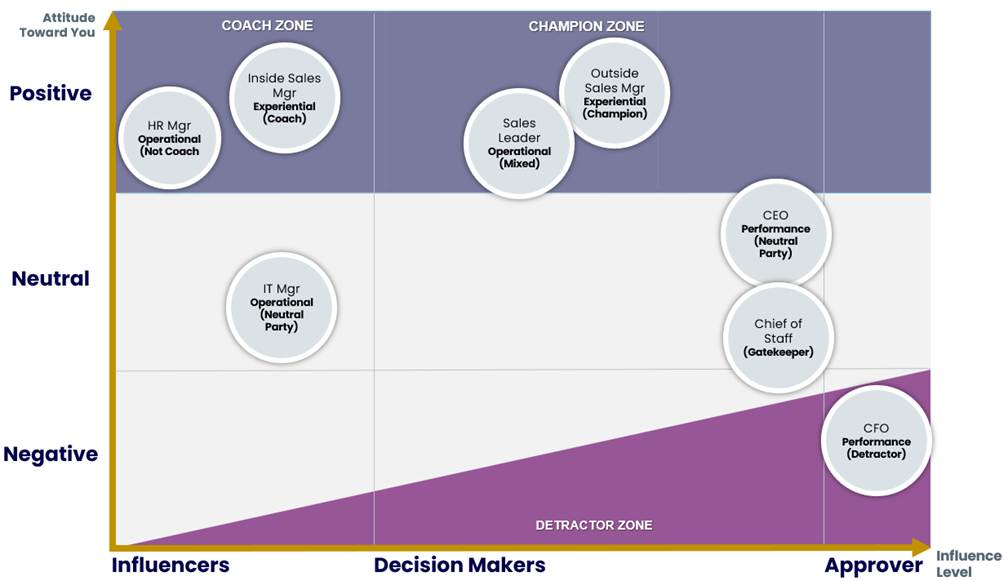
- Reaching Decision-Makers: This is where multi-threading either happens on purpose or doesn’t happen at all. Work the one friendly contact who returns your calls, and you’ll stall the moment that contact changes jobs or loses influence. The sellers who reliably get to decision-makers map everyone touching the deal, by influence and by attitude toward the seller, and work out what each person needs before asking for anything.
- Relationship Building: Building relationships and trust is worth a second look, because most distributors would say they’re already great at it. The data says otherwise. On the relational half (empathy, kindness, active listening) distribution is close to parity with the rest of the market. Nobody needs to teach distribution sellers how to be likable. The real gap sits on the cognitive half: judgment, consulting skills, critical thinking, turning data into insight. Most sellers think relationship means friendliness. The best ones know it’s servant leadership, delivering value from the buyer’s perspective and making people feel genuinely understood.
- Consultative Selling: This critical competency is the lowest-scoring of these five in distribution, and the lowest of all ten competencies across every vertical OMG measures. Most sellers do light discovery and present or quote something. That’s not consulting. It’s order-taking. Real consultative selling means assessing the current state, the desired future state, and the gap between them before proposing anything. Distribution being lowest here is also the best opportunity on this list, since almost nobody in the market has closed this gap either.
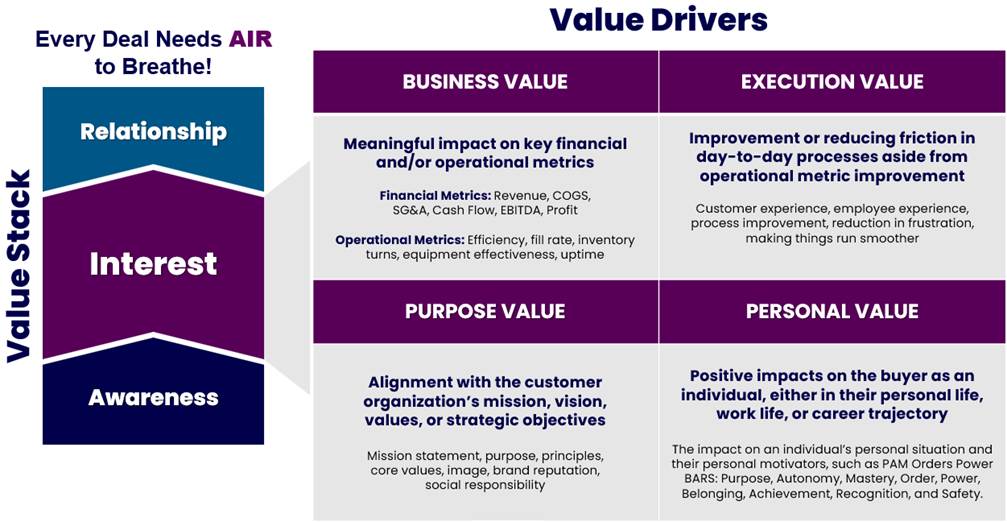
- Value Selling: Selling value comes down to one question: do you know what each stakeholder in a complex deal with multiple decision makers truly cares about? Most conversations stay at specs, availability, and price, because that’s easy and safe. The sellers who preserve margin know each stakeholder’s primary value driver, whether that’s a financial or operational metric, a smoother process, alignment with their mission, or something personal to them, and they speak in those terms specifically. It’s buyer-centric, and it’s learnable. It just isn’t happening consistently.
What Closes These Gaps
Naming a skill gap doesn’t close it.
Each of these five has specific skills and tools behind it, and every one of them is trainable. Here’s the short version, one for each gap.
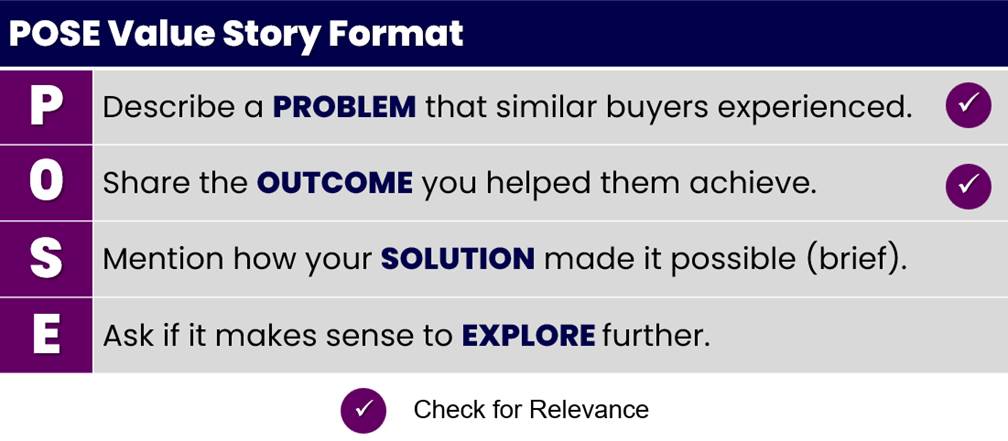
- Hunting: the POSE Value Story. POSE stands for Problem, Outcome, Solution, Explore. Describe a problem a similar buyer had, share the outcome you helped them reach, briefly mention how, then ask if it makes sense to explore further. You only get one value proposition, but you get a POSE story for every problem you solve. That’s a much bigger toolkit, and it means you open with something relevant to the buyer instead of a pitch about you and your company.
- Reaching Decision-Makers: navigating the buyer landscape. People often call this a relationship map, which is fair shorthand, but the buyer landscape is more than a chart of names. You’re plotting everyone involved by influence level and attitude toward you, identifying who’s a champion, a coach, a gatekeeper, a neutral party, or a detractor, and working out what each one needs to move forward. You can’t reach a decision-maker you haven’t identified, and the route up usually runs through someone who already trusts you.
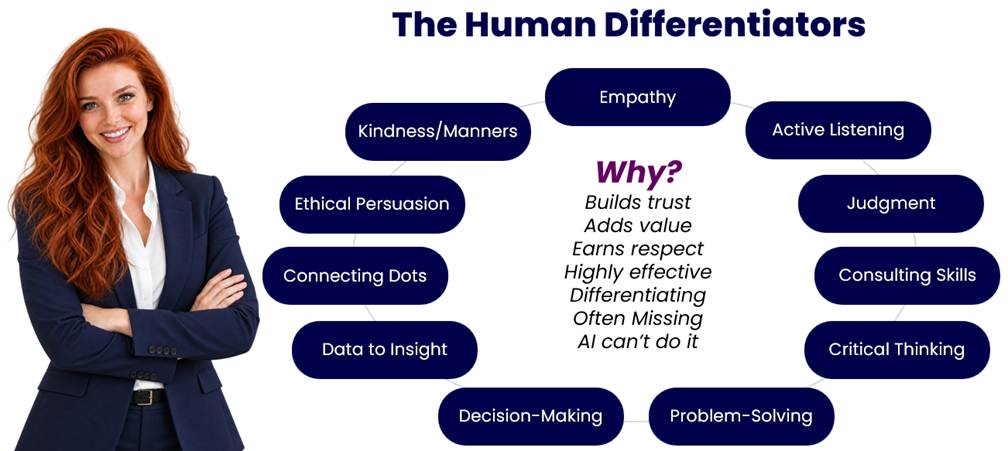
- Relationship Building: the Human Differentiators and ACC. Start with what buyers say about us. Only 33% feel their sellers are well-informed about their business, and buyers think just 25% of sales reps are effective at engaging with executives (a juxtaposition of data from CSO Insights and ValueSelling Associates). Buyers do not feel understood.
The Human Differentiators are the capabilities AI can’t replicate and buyers still want from a person: empathy, active listening, judgment, consulting skills, critical thinking, ethical persuasion, connecting dots, and turning data into insight.
ACC is the active listening model built to close that understanding gap directly. Acknowledge what the buyer said with an empathy statement. Clarify with questions. Confirm by summarizing and asking them to verify you got it right. Do that consistently and buyers feel understood, because they actually are.
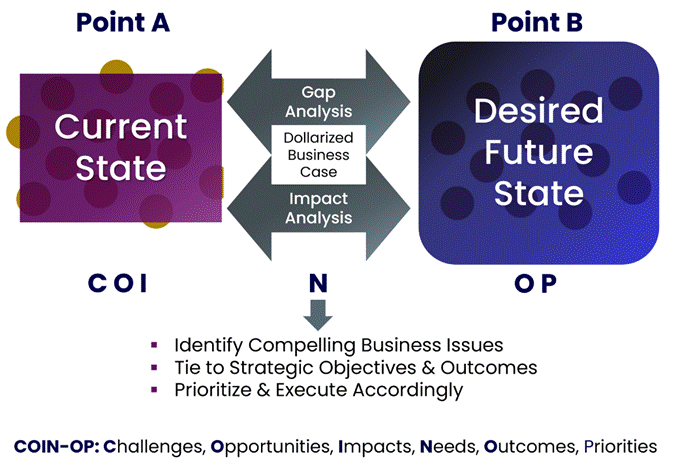
- Consultative Selling: a structured situation assessment with COIN-OP. COIN-OP covers Challenges and Opportunities, Impacts, Needs, Outcomes, and Priorities. Run it with ACC and you peel the onion, getting past surface symptoms to root causes.
The average seller skims the rock across the pond.
Top performers do a deep dive.
Average sellers hear a stated need and they present, quote, or propose. Going deeper does two things at once: the buyer feels deeply understood, which almost no one delivers, and you learn what really matters and where you can genuinely help. Watch the Impacts especially. Most sellers jump from a challenge straight to a need, skipping the part that builds urgency and proves understanding.
- Selling Value: know each stakeholder’s value driver. There are four, and different people in the same deal care about different ones. Business Value is the impact on financial or operational metrics: revenue, margin, fill rate, uptime. Execution Value is improving processes and experiences, whether that means removing friction or making something work better than it did before. Purpose Value is alignment with the organization’s mission, values, or strategic objectives. Personal Value is the impact on that individual: their workload, their credibility, their career. Learn which one a given stakeholder cares about, then talk in those terms.
None of this is innate talent. It’s all learnable. That’s what makes three flat years so frustrating.
How This Maps to My Top-Performer Analyses
I didn’t pull concepts like POSE, the Human Differentiators, COIN-OP, or Value Drivers out of thin air. They came out of twelve Top-Performer Analyses I’ve conducted over sixteen years, studying what the very best sellers do differently from everyone else. The patterns kept repeating across industries, so I built them into a sales methodology, The CoNavigator Method for B2B Sales Mastery.
This is one of the things I’ve enjoyed about working with OMG. We have two different bodies of evidence and the same gaps: my research keeps turning up the same behaviors that separate top performers, and OMG’s data keeps confirming distribution specifically hasn’t closed them.
That same validity study also showed something specific to this piece. Of the three competency groups OMG measures, Tactical Skills, the learned, executable side of selling that the five gaps above belong to, had the strongest correlation to actual job performance. Stronger than Will to Sell (a seller’s desire, commitment, and motivation to succeed). Stronger than Sales DNA (the underlying beliefs and traits that either support sales success or sabotage it, like needing approval or being uncomfortable talking about money). The category distribution has failed to close for three years is also the one that most predicts higher performance.
The Role Sales Managers Play
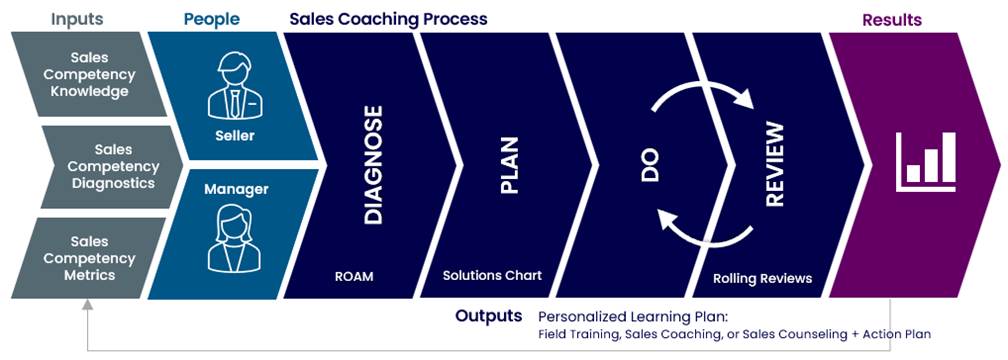
It’s one thing to define gaps or even determine what will close them. Important work, but incomplete. It’s quite another thing to close those gaps and improve sales performance. This is where sales manager engagement is critical.
Your frontline sales managers are a force multiplier. They’re the single strongest performance lever you have, and the change agents you need to truly transform your sales force.
That said, the sales rep owns their development, and their manager is like their guide or Sherpa. Both are accountable in different ways. As part of being that guide, managers should have a full sales coaching system available. I built that system out of the same top-performer analyses, since I included frontline sales managers in the research. It covers the inputs, the roles each person plays, a coaching process, a set of tools, the outputs you should expect, and four models.
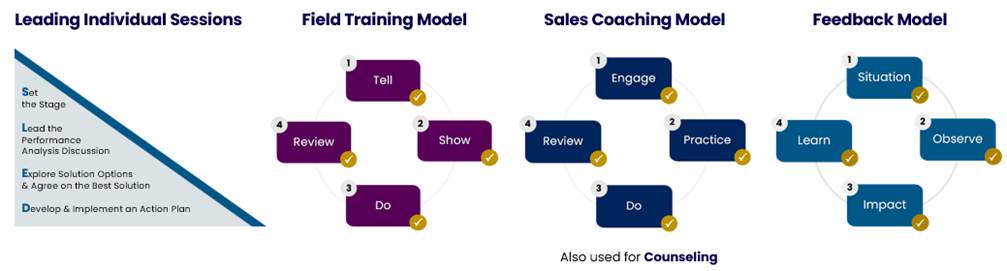
The four models are what managers use to solve the gap identified: one for leading individual coaching sessions, a Field Training model for knowledge gaps, a Sales Coaching model for execution gaps (also used for counseling, when the issue is mindset or a self-limiting belief rather than skill), and a Feedback model for debriefing what you observed. Each has its own steps. I’ve written about the full system before, and there are links in the Resources section below.
That full system is what creates radical change, real performance improvement, and a coaching culture where managers and reps stay in a genuine cadence of continuous improvement. It’s also not something a manager adopts overnight.
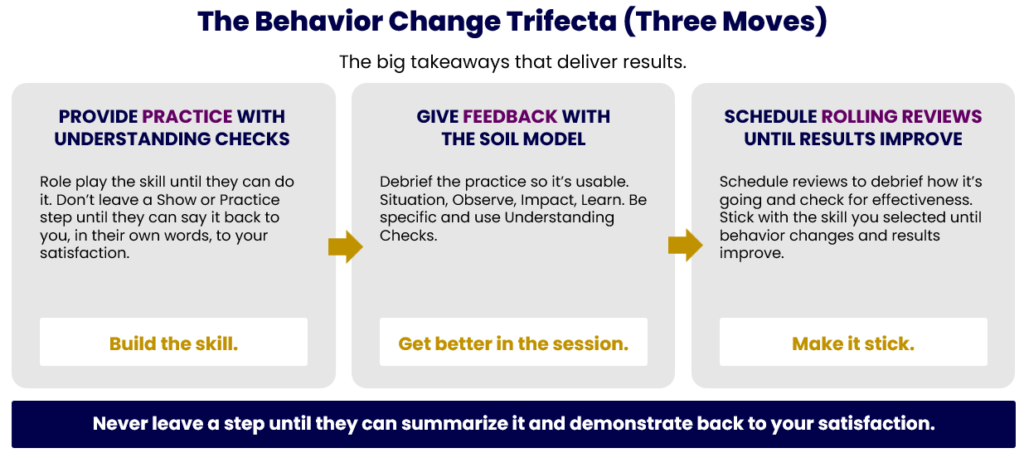
So, for today, we’re going to skinny it down one step further, to three moves that will start closing the gaps above right now, while you build toward the full system. Call it a kickstart.
The Three Moves for Managers
First, decide whether you’re looking at a knowledge gap or an execution gap. If a rep doesn’t know what to do, why it matters, or how to do it, train it. If they know what to do and they’re trying, but they’re not good enough at it yet, training again wastes everyone’s time. Coach it instead. Most managers get this backward more often than they’d guess: they re-explain things to reps who already understand them, and skip the practice reps need to get better at doing them.
Once you know which one you’re dealing with, we’re back to the three moves:
- Practice with understanding checks: Role-play the skill until the rep can do it under pressure, not just describe it back to you. A rep who can explain a POSE story in a meeting isn’t the same as a rep who can deliver one on a cold call. Don’t move on until they’ve proven it in the room, in their own words, to their own satisfaction as much as yours.
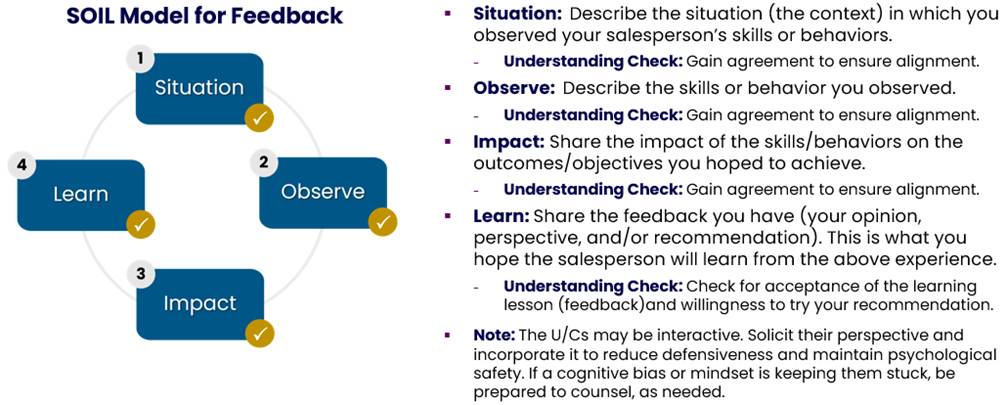
- Feedback with the SOIL model: Debrief what you observed so it’s usable: Situation, Observe, Impact, Learn. Specific, not vague. “Good job on that call” changes nothing. “When the buyer mentioned budget, you jumped straight to price instead of asking what budget was protecting” changes something.
- Rolling reviews until it sticks: One good coaching conversation doesn’t fix a skill gap any more than one good workout builds a habit. Schedule the follow-up, check whether the behavior actually held, and stay on that same skill until it does. Then help the rep pick the next gap.
What Managers Can Inspect
Each of these gaps produces something concrete a manager can inspect, so you’re not guessing whether your coaching is working. Relationship building and consultative selling are combined here, because they share the record from a discovery call, showing both how well the rep understood the buyer’s situation and how well they connected with the buyer while doing it.
Here are four things to look at:
- For hunting: look at the rep’s POSE stories. Do they have more than one? Does each one start with the buyer’s problem, or does it start with your solution? How did they personalize it, and was it relevant to that buyer?
- For reaching decision-makers: look at their relationship maps. How many contacts do they have on a deal? Which roles are missing, compared to who is normally involved? Do they know what each person needs to move forward or grow the account (aka, buying process exit criteria)?
- For relationship building and consultative selling: look at their situation assessments and the COIN-OP information they gathered during discovery. Are the Impacts filled in, or did the rep jump straight from Challenges to Needs, skipping the parts that allow them to build a compelling business case? Did they use ACC to peel the onion and demonstrate understanding? Did the solutions presented align to the needs and desired outcomes?
- For selling value: ask the rep to give you a value driver read on each stakeholder in a live deal. Can they name what that person truly cares about, in that person’s own words, not generic language from internal product documentation?
By the way, if you lead a smaller team, lead an inside team, or work as a player-coach, you can still inspect all four of these. The methods and tools remain the same. (And while we’re at it, CEOs and CROs, it’s time we put the player-coach model to bed. Managers can’t be force multipliers and maximize rep development and coaching impact when they’re also working as a seller. Food for thought.)
Closing Thoughts
Three flat years of skill development isn’t bad luck. It’s what happens when a rep’s development and a manager’s guidance never turn into a habit on either side, meaning a repeatable, replicable process they both follow.
Closing these skill gaps doesn’t mean waiting until you can implement a new sales methodology or roll out the full sales coaching system (although you should eventually ensure you have both in place). It doesn’t mean a rep waiting for someone else to develop them. It means a rep is willing to own their gaps, and a manager is willing to guide them through the three moves: practice, effective feedback, and staying on it until the skills improve and the numbers follow.
The ball’s in your court now. Show us your moves, managers!
Resources
Links already in the body, repeated for convenience
- Objective Management Group—What Actually Predicts Sales Performance (the 2026 validity study): https://www.objectivemanagement.com/research-blog/research/what-actually-predicts-sales-performance/
- Objective Management Group (Sales Force Diagnostics | Hiring Assessments): https://www.objectivemanagement.com/
Sales methodology
Sales coaching system, referenced in “The Role Sales Managers Play”
- 4 Coaching Models That Sales Managers Need to Master (DSG)
- Your Sales Managers Think They’re Coaching, But They’re Probably Not (DSG)
- Sales Coaching Excellence Is a Competitive Differentiator (DSG)
Other related articles on Distribution Strategy Group
- The Influential Power of Storytelling in Sales
- How to Navigate the Buyer Landscape
- The Combined Power of AI and Human Differentiators in Sales
- Discovery Skills + Patience: The Superpowers of Selling
How to Improve Opportunity Management and Increase Win Rates
Share this article: