


Why This Matters to Distributors: Stronger factory output is being driven by inventory stockpiling and rising prices — not sustained end demand — leaving distributors to manage volatile pricing, uneven order patterns, and growing supply chain risk.
U.S. manufacturing activity accelerated in April to its highest level in four years, but the data behind the headline number points to a fragile expansion shaped more by inflation and supply-chain anxiety than broad-based demand growth.
The S&P Global Flash U.S. Manufacturing Purchasing Managers’ Index (PMI) rose to 54.0 in April, up from 52.3 in March and the strongest reading since mid-2022. A reading above 50 indicates expansion.
S&P Global attributed the gain to stronger output and new orders. But the research firm said much of the activity reflected companies building inventory ahead of anticipated price increases and supply disruptions rather than a pickup in end-market demand. “The rise in production was often linked to stock building in response to concerns over supply availability and higher costs,” the firm said in its April release.
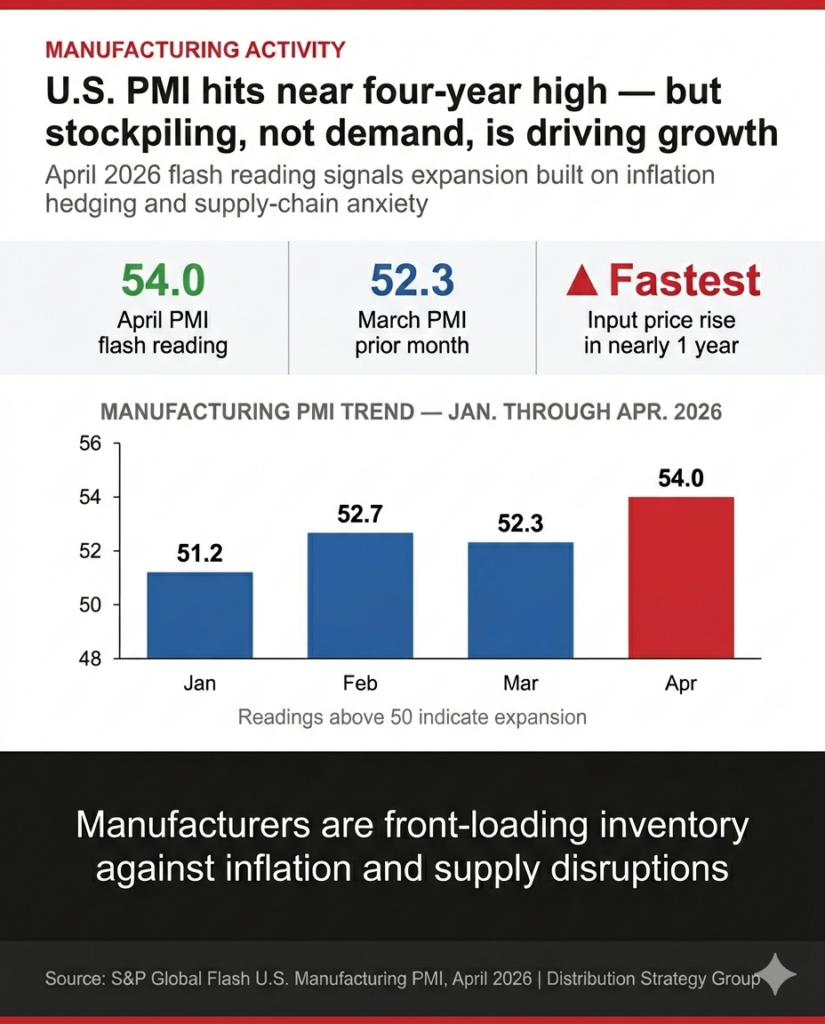
That pattern — front-loading purchases ahead of disruption — has appeared in previous tariff and supply chain cycles. It can produce short-term growth figures that overstate underlying demand, typically followed by slower order activity once inventory reaches target levels.
Supply conditions deteriorated alongside the output gains. S&P Global reported longer supplier delivery times, increased backlogs tied to logistics delays and disruptions linked in part to geopolitical tensions affecting shipping and energy markets. The combination of rising production and worsening supply chains creates an operating environment that is more complex than the headline PMI reading suggests.
Cost pressures intensified as well. Input prices rose at the fastest pace in a year, while output prices climbed at the sharpest rate since mid-2022. Companies cited higher energy costs, raw material inflation, and transportation expenses as key drivers. The data suggests that much of April’s revenue growth in the manufacturing sector is being driven by pricing rather than volume.
Employment did not keep pace with production. Despite stronger factory activity, manufacturing sector hiring declined modestly in April, with companies pointing to ongoing cost control efforts, uncertainty about the durability of demand and continued labor constraints. The divergence between rising output and weak hiring reflects the uneven and cautious nature of the recovery.
For wholesale distributors, the April PMI data presents a mixed signal. The near-term order environment is strengthening, but the underlying drivers — pre-buying tied to cost hedging rather than end-customer pulls create meaningful risk later in the year.
The broader dynamic is a manufacturing sector that is growing defensively. Output is expanding, but it is being driven less by customers needing more products and more by companies hedging against what they expect to happen next. For distributors, that distinction matters: momentum built on caution and cost anxiety is structurally different from momentum built on customer demand, and it does not carry the same predictive weight for the months ahead.
Do not miss any content from Distribution Strategy Group. Join our list.
Share this article:
