
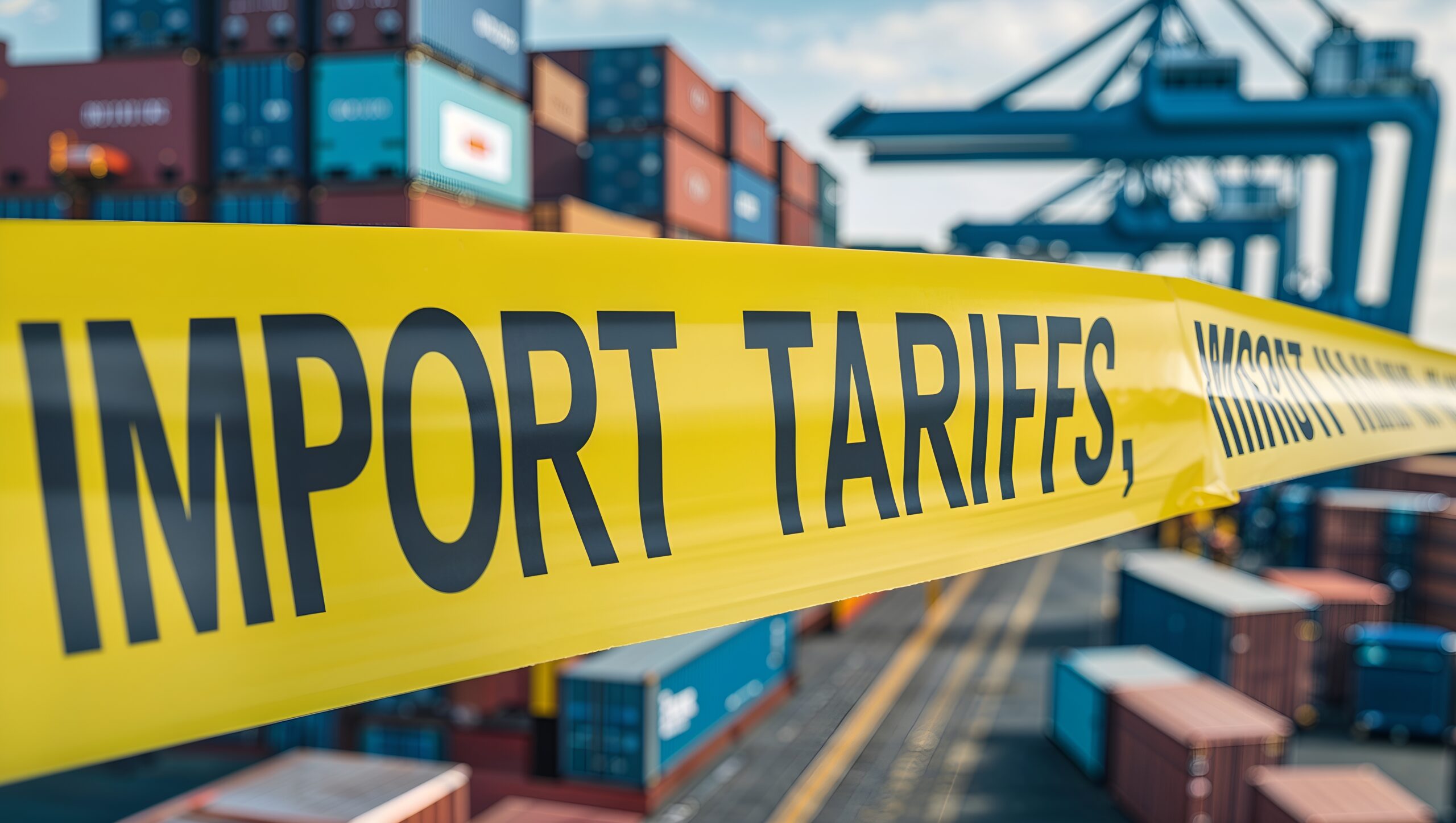
Tariffs are top of mind in the business world today, especially among distributors which are particularly hard hit by higher tariffs. Separate reports this week suggest that import duties are starting to push inflation up and will suppress U.S. economic growth, while a survey shows company executives are seeking more flexibility in anticipation of ongoing trade volatility.
Among the new developments:
- S&P Global says the impact of higher U.S. tariffs on imported goods showed up in the 2.7% year-over-year increase in the consumer price index in June, the largest annual increase since February. Particularly impacted were goods frequently are imported, such as audio equipment (up 11.% compared to a year ago) and furniture (up 5.1%). S&P Global says the inflation reading makes it less likely the Federal Reserve will lower interest rates at its meeting this month, which is bad news for the housing market.
- The Federal Reserve Bank of San Francisco predicts inflation-adjusted income in the U.S. will fall by 0.4% by 2028 due to tariffs. Overall employment will decrease by 0.2%, as an increase in domestic manufacturing jobs is offset by declines in the agriculture and services sectors.
- Global Purchasing Managers Index survey data for July suggests “the global economy is rapidly loving momentum,” according to a note from S&P Global, which surveys executives in 30 countries for the PMI reports. “July 2025 data from S&P Global reveals a significant deceleration in growth, with key indicators flashing warning signs not seen since the early stages of the pandemic. This isn’t just a slowdown; it’s a potential harbinger of a broader economic contraction, demanding a reassessment of investment strategies and risk management protocols.”
How companies are responding to higher tariffs
While such dire predictions may prove unfounded, many business executives are reassessing their strategies in light of the big shifts in tariff policy by the administration of President Donald Trump.
Among the strategies being adopted are faster adoption of artificial intelligence and other automation technologies, and seeking flexibility in sourcing and in contracts with suppliers, , according to a survey of 402 U.S. business executives by HFS Research for accounting and advisory firm KPMG.
While 44% of executives surveyed said their firms were making no changes or taking a wait-and-see approach, 32% said they were taking short-term cost-cutting measures and 22% engaging in scenario planning for restructuring of operations. Among the seven sectors covered by the survey, manufacturing and industrial and retail and consumer products were the two most likely to be evaluating long-term changes, at 28% and 26%, respectively.
The fact less than a quarter of companies are planning for fundamental change suggests many “enterprises are frozen at the edge of transformation,” the report says.
“Tariffs aren’t existential threats for most enterprises. Instead, they’re shining an uncomfortable light on brittle operating models designed for a bygone era of steady growth, predictable supply chains, and frictionless globalization.”
26% of respondents said recent trade policy changes and tariff threats have already caused significant disruption to current sourcing or delivery plans and 37% said that would be the case within two years.
Faced with this kind of volatility, many companies invest in automation, the report says. “Why automation? Because it delivers impact without inviting complexity. It doesn’t require site moves, new vendor contracts, or regulatory reviews. It’s the one lever companies can pull fast—quietly reengineering the work itself before taking bigger swings.”
49% of respondents said they are very likely to accelerate deployments of AI and automation and 34% say they are already doing so. Another 70% say they are reevaluating their vendor mix or are very likely to.
Asked why they are moving quickly on AI and automation, 50% said to accelerate service delivery without increasing headcount and 41% to reduce exposure to offshore labor volatility.
Tariffs lead companies to seek flexibility from vendors
The shifts in trade policy are leading companies to seek flexibility from vendors, the study shows. When asked what criteria have become important when selecting vendors because of tariffs, 56% said flexibility of delivery location, ahead of U.S.-based operations (38%), cost and ROI transparency (35%) and regulatory compliance readiness (32%.)
They are also looking for additional flexibility when negotiating contracts with vendors, with 52% saying they are adding contract clauses that allow them to renegotiate prices based on economic triggers.
Distributors and other companies should plan on higher prices as a result of tariffs and other factors, including the likelihood of higher inflation due to increased government spending, economist Lauren Saidel-Baker of ITR Economics recently told Distribution Strategy Group. She says distributors should consider building in escalator clauses in their contract with customers allowing them to raise prices in line with rising costs.
Share this article:

Leave a Reply