


A hurricane shuts a port. A supplier’s plant goes offline. A demand spike lands on a Monday morning. In every one of these scenarios, the manufacturer has options. They can throttle production, run a different line, or push a committed ship date out by a week. The retailer has options too. They can trim an order, substitute a comparable SKU, or move a promotion by a month. The distributor sits in the middle and has almost none of the same flexibility. The product was promised. The truck was scheduled. The customer is already planning around the delivery that was committed. When the distributor misses, they do not just absorb the disruption. They absorb the blame, the expedited cost, and sometimes the contract.
After more than a decade in enterprise supply chain operations, and now building AI systems for disruption response, one pattern has been consistent. The distributor’s operating environment is the hardest in the chain to run, and the most underinvested in the technology required to run it well.
The Squeeze is Structural, Not Circumstantial
Manufacturers hold leverage over their inputs. Retailers hold leverage over their end customers. Distributors hold inventory. When the chain bends, the distributor is the node that must deliver against a commitment they have already made, to a customer who does not care where the problem originated.
Substitution is also harder than anyone outside distribution realizes. SKUs are often specified in the customer’s bill of materials or their shelf plan. A comparable product is not an acceptable product. And the information arrives late. By the time a missed vessel shows up in a distributor’s data, the manufacturer has known for two days and the freight forwarder for one. The distributor’s reaction window is the narrowest in the chain, and it opens last.
Dashboards are Not visibility; They are a Historical Record
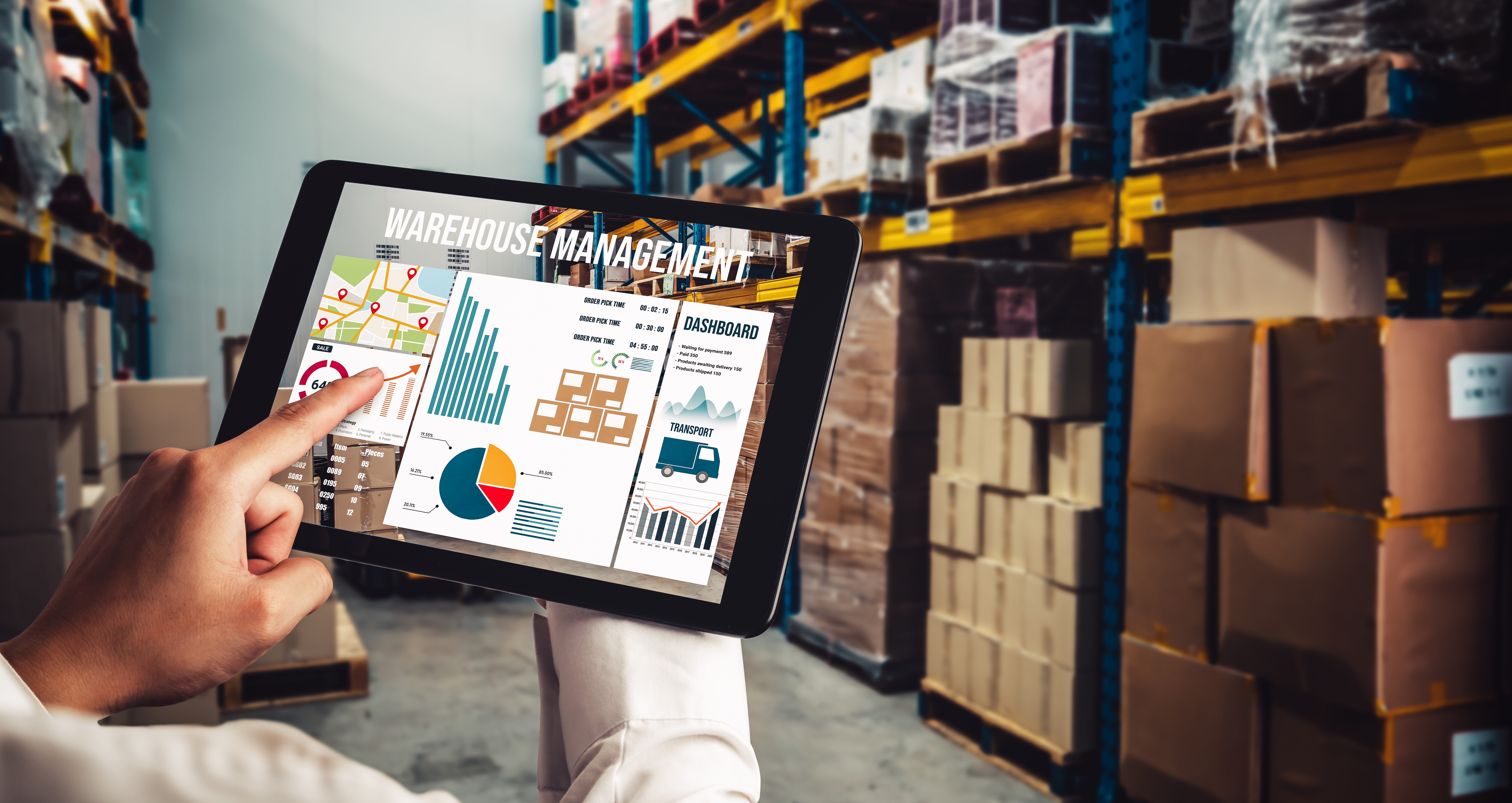
Most distributors have invested in visibility over the past five years. The typical investment looks like a dashboard. Inventory on hand, days of cover, supplier on time delivery, open purchase orders in transit. These are useful reports. They are not a response system.
A dashboard tells you that a stockout happened. It does not tell you to expedite the replacement from a different branch, switch to a backup supplier who already has open capacity and notify the top three customers by margin before the service desk starts fielding calls. That is what the moment requires. The dashboard reports it afterward. Visibility without action is a more expensive way to document your losses.
What a Real Disruption Response Looks Like
In a functioning response, four things happen in parallel within the first hour.
Inventory gets reallocated across locations. The branch that can cover the affected customer is identified, the transfer order is cut, and the receiving branch is notified to expect it.
Inbound freight is rerouted. If the disruption is upstream, alternate lanes and alternate suppliers are activated. Standing terms with backup suppliers matter here, because a PO that requires a fresh round of approvals is a PO that will not arrive in time.
Customer communication goes out before the customer calls. Affected accounts are segmented by contract value, fill rate commitments, and relationship sensitivity. The top accounts hear from a named person. The rest receive a clear, accurate update that sets expectations.
Internal stakeholders align on one picture. Sales, operations, and finance are all looking at the same data. No one is running a separate spreadsheet to figure out what the actual impact is.
Most distributors do not operate this way. Not because they do not know what good looks like, but because they do not have a system that can execute this coordination at the speed the disruption requires.
What Does the Manual Version Cost?
In most distribution operations today, this coordination is held together by three or four experienced people who happen to be good at their jobs. A buyer who knows which supplier to call. A branch manager knows which location has the inventory before the system does. A sales rep who knows which customer will tolerate a delay and which one will not. When this team is on their game, the company performs. When two of them are in a meeting and the third is on vacation, a disruption that should have cost ten thousand dollars costs three hundred thousand.
The visible costs are easy to count. Air freight instead of ground. Premium carriers. Substitution margin given up. The harder costs are the ones that do not show up in P and L for six months. The contract that got quietly moved to a competitor. The customer whose fill rate scorecard dropped two points and whose next RFP you will not be invited to.
What Execution Looks Like When AI is Involved
The shift is from monitoring to acting. A modern disruption response system does not stop showing a user what is wrong. It proposes the specific moves, explains the reasoning, and where the operator authorizes it, executes the moves directly. Reallocation transfers. Inbound lane switches. Alternate supplier activation. Customer notifications from approved templates.
Simulation is part of this too. Running the scenario before it happens, understanding which customers are exposed to which failure modes, and fixing the weak points in the network while there is still time to fix them cheaply. This is the premise behind ResilienceXAI, the platform I founded: disruption response as a decision engine rather than a dashboard, designed for the distributor who does not have the luxury of reacting slowly.
The foundations matter. A system cannot act on data it cannot trust. Clean item master data. Integrated ERP and WMS. An explicit authority matrix that says which moves the system can make autonomously, which require human approval, and which escalate. Most distributors are closer to this foundation than they realize, but the gap is never on the AI side. It is in the data hygiene and the process discipline that comes before it.
Where to Start, Realistically
Do not start with a platform. Start with one category or one customer segment that hurts the most when it fails. Map the current disruption response manually. Write down each step, who does it, and how long it takes. The first automation target is the step that costs the most time or the most human attention. Replace that one step. Measure the delta. Then scale.
The distributors who will win the next decade are not the ones with the biggest dashboards or the most expensive platforms. They are the ones who shortened the distance between knowing and doing. That is the dilemma worth solving.
Share this article: