



Why This Matters to Distributors: Inventory levels continue to increase, but at a pace that suggests distributors remain cautious despite stronger manufacturing demand and improving trade activity.
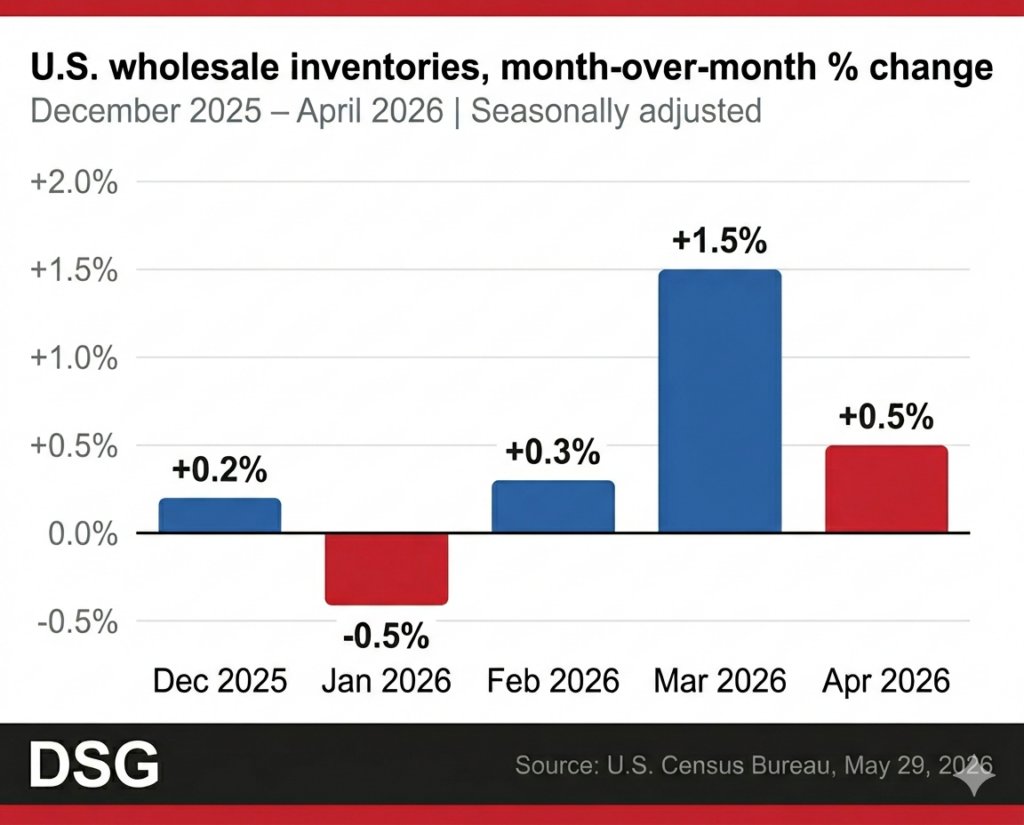
Wholesale inventories rose 0.5% in April to $938.6 billion, extending a steady but restrained restocking trend across the distribution sector, according to advance estimates released Friday by the U.S. Census Bureau.
The increase followed a revised 1.5% gain in March, up from the agency’s earlier estimate of 1.3%. Compared with April 2025, wholesale inventories were up 3.4%.
The data indicates distributors are continuing to rebuild inventory levels but remain cautious about committing to larger stock positions despite signs of strengthening demand elsewhere in the economy.
That caution contrasts with a sharp increase in manufacturing orders reported earlier this week. New orders for durable goods surged 7.9% in April to $346 billion, marking a second consecutive monthly increase. Transportation equipment drove much of the gain, with orders rising 21.5% to $130.9 billion. Excluding transportation, durable goods orders increased 1.1%.
The disparity between stronger manufacturing activity and more modest inventory growth suggests distributors are waiting for clearer evidence that demand will remain durable before accelerating purchases.
Trade data released alongside the inventory report pointed to improving economic activity. The advanced goods trade deficit narrowed to $82.4 billion in April from $85.3 billion in March. Exports increased $8.5 billion to $219.7 billion, while imports rose $5.6 billion to $302.1 billion.
The combination of rising exports and a narrowing trade deficit could support additional order activity across manufacturing and distribution channels in the coming months.
Retail inventories also increased in April, climbing 0.7% to $827.3 billion. Retail inventory levels were up 3% from a year earlier and grew faster than wholesale inventories during the month.
That trend could prove significant for distributors. Retail inventory growth often precedes replenishment orders flowing upstream through the supply chain. If consumer demand remains stable, retailers may eventually increase purchases from wholesalers to maintain inventory levels.
For now, inventory growth remains controlled.
The April figures suggest distributors continue to emphasize inventory discipline following the excess stock buildups and subsequent corrections that disrupted many sectors during 2022 and 2023. While inventories are increasing, the pace remains well below the aggressive replenishment cycles seen earlier in the decade.
The stronger durable goods orders data bears watching. If manufacturing demand remains elevated through the summer, distributors could face increasing pressure to accelerate inventory replenishment to support customer demand.
The Census Bureau is scheduled to release its next advance economic indicators report, including May inventory data, on June 26.
Do not miss any content from Distribution Strategy Group. Join our list.
Share this article:
