




Why This Matters to Distributors: Freight moving through less-than-truckload (LTL) networks is becoming heavier and more industrial, an indication that manufacturing activity is strengthening. For distributors, that could mean more reliable transportation, improved capacity and fewer supply chain disruptions heading into the second half of the year. Second-quarter results from the major LTL carriers next week will show whether the trend continued through June.
Industrial freight is beginning to recover after more than two years of uneven demand, giving distributors an early indication that transportation networks are becoming more stable as manufacturing activity improves.
Monthly operating data from the nation’s largest less-than-truckload carriers, including XPO, Old Dominion Freight Line, Saia and ArcBest, show heavier shipments moving through their networks, a key indicator that factories and industrial customers are shipping more products. LTL carriers transport freight that falls between parcel shipments and full truckloads, making them a critical part of the supply chain for distributors moving electrical products, industrial supplies, plumbing products, HVAC equipment and maintenance, repair, and operations (MRO) products.
One of the clearest measures of industrial activity is weight per shipment. Heavier shipments reflect manufacturing and industrial freight, while lighter shipments are more commonly associated with retail and e-commerce.
Old Dominion reported May weight per shipment increased 1.6% year over year, despite a 5.3% decline in shipments per day. Saia reported weight per shipment increased 2.9% quarter to date during the second quarter. ArcBest said tonnage per day in its asset-based business increased 5% to 6% during April and May, driven by a 9% increase in weight per shipment.
XPO reported a different pattern. Tonnage per day increased 0.5% in May as shipments per day rose 3.3%, while weight per shipment declined 2.7%. The company has said the shift reflects its strategy of serving more local customers, which typically ship lighter freight.
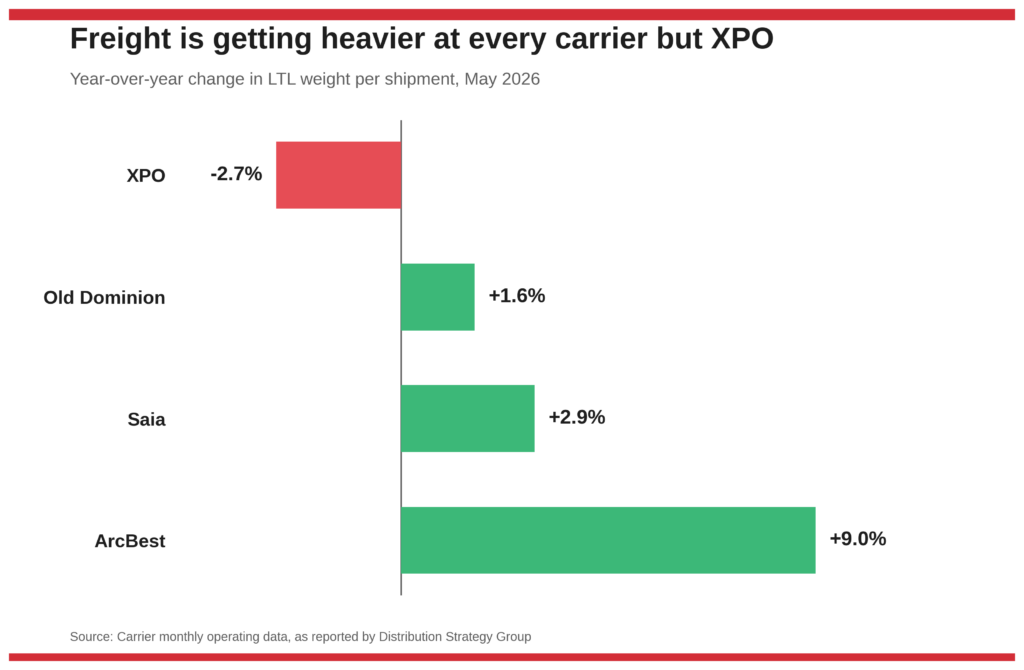
Taken together, the data suggest industrial shipping is strengthening, although the pace varies by carrier and customer mix.
Carrier executives say the improving freight mix reflects stronger manufacturing activity rather than a broad recovery across the economy.
Old Dominion President and CEO Marty Freeman told analysts during the company’s first-quarter earnings call that demand strengthened as the quarter progressed. XPO, Saia and ArcBest have also reported improving shipment weights in recent operating updates, although overall freight volumes remain mixed.
Carriers have maintained pricing discipline rather than cutting rates to gain market share, helping preserve network stability despite freight demand that remains below pre-2024 levels.
For distributors, a healthier transportation market means freight moves more predictably through carrier networks.
Industrial and MRO distributors shipping bearings, motors, fasteners, and automation products are among those most likely to benefit as manufacturing-related freight strengthens. Electrical distributors moving transformers, switchgear, and wire, along with plumbing and PVF distributors shipping valves, fittings, and castings, also could see improved service levels and capacity.
HVAC distributors present a more mixed picture. Commercial and industrial construction continue supporting freight demand, while residential construction remains comparatively weak. Building materials distributors tied to housing are less likely to experience the same improvement because residential freight continues to lag manufacturing.
The improving freight environment also aligns with recent earnings reports from distributors including Fastenal, MSC Industrial Direct and Genuine Parts, which have described industrial demand as stable even as customers remain cautious about capital spending.
More consistent freight flows reduce the risk of the capacity shortages and service disruptions that characterized the pandemic years. While transportation costs remain above pre-pandemic levels, distributors are benefiting from more predictable transit times and improved carrier performance.
The next indication of whether the recovery is broadening will come next week when the major LTL carriers report second-quarter results.
Old Dominion and ArcBest are scheduled to report on July 29, followed by XPO and Saia on July 30. Those reports will show whether improving shipment weights continued through June and whether carriers expect manufacturing-related freight demand to strengthen during the second half of the year.
For distributors, the trend bears watching. A stronger industrial freight market typically signals healthier factory activity, steadier transportation networks, and a more reliable supply chain—key factors for distributors managing inventory, serving customers and planning for the remainder of 2026.
Do not miss any content from Distribution Strategy Group. Join our list.
Share this article:
