




Ray carries the largest book of business in the region. Thirty-one years with the same distributor. He knows which plant manager won’t take a meeting before 9:00 a.m., which purchasing lead needs three quotes for everything (even when she’s already decided), and which of his accounts would follow him to a competitor tomorrow if he asked. He wasn’t planning to ask. He was planning to retire in three years, and he’d said so.
Then his wife got a diagnosis that changed everything. Ray wants to be home, and no reasonable person would argue with him. Three years just became four months.
Now, let’s watch that same announcement land in two different companies.
One Announcement, Two Companies
In Distributor A, the news sets off a scramble. Nobody has mapped Ray’s relationships, so nobody knows which accounts are held together by Ray alone. The customer relationship management system (CRM) has contact names, phone numbers, and not much else. There’s no successor identified, so the region manager starts interviewing while Ray runs out the clock. The eventual handoff is a spreadsheet, a few joint calls squeezed into Ray’s last three weeks, and a sincere “call me if you have questions” that expires the first time Ray’s boat gets decent cell coverage.
In Distributor B, the same announcement still stings. Four months instead of three years is a sprint, no matter how prepared you are. A structured transition program doesn’t prevent the surprise, and it doesn’t eliminate the initial panic that comes with an accelerated departure like this. But in Distributor B, Ray’s key relationships are already mapped. His top accounts have more than one person from the company in them. His account plans are living documents, not annual paperwork. The CRM actually says something useful. The scramble in Distributor B is about accelerating a plan that exists. The scramble in Distributor A is an archaeology dig.
The difference between these two companies isn’t luck, and it isn’t Ray. It’s a system. The rest of this article is about how to become Distributor B.
The Silver Tsunami Has a Date Attached

However they refer to it, distribution leaders have worried about the silver tsunami for years, usually in the context of ownership transitions and the labor force in the warehouse and on the counter. It applies just as much to the sales force, and the numbers say it’s not a distant problem.
According to U.S. Census Bureau data (compiled by Data USA), the average age of wholesale and manufacturing sales representatives is roughly 46. More telling: the three largest age cohorts in the occupation are 50–54, 55–59, and 45–49, which together make up more than a third of the entire workforce. And in most distributors, age and book size correlate. Your most seasoned reps often hold your largest accounts, because those relationships took decades to build.
Investors treat the average age of a senior leadership team as a yellow flag when it’s high and there’s no succession plan in place. The same logic applies to your sales force. If a third of your revenue is managed by people within striking distance of retirement, and you have no transition discipline in place, that’s not a talent issue. That’s an enterprise risk sitting in plain sight on your org chart.
Here’s what makes this problem sneaky: accounts rarely leave at the retirement party.
They drift. A category moves to another supplier. A location starts buying elsewhere. A new project gets quoted with someone else “just to compare.” Meanwhile, the account still shows active in your system, still orders regularly, and still looks fine on the report. The revenue erosion happens one product line and one location at a time, which is exactly why nobody notices until the annual review, when someone asks why a $2 million account is now a $1.3 million account. (Wallet-share erosion deserves its own article, and I plan to write it. For now, know that a botched transition is one of its most reliable causes.)
What a Sloppy Handoff Really Costs
And let’s be honest about the competitive dynamics. Your competitors know Ray retired. Some of them sent a card. The months after a veteran rep leaves are the single best window a competitor will ever get to break into an account you’ve held for twenty years, because the one thing protecting that account, the personal relationship, just left the building. (Sidebar: this is amplified when the average age of your buyers mirrors the average age of your sellers—a separate but related risk that isn’t often discussed.)
Retirement Forecasting Is Succession Planning for the Sales Force
Companies run succession planning for executives. They identify critical roles, forecast likely departures, develop successors, and review the plan annually. Almost nobody does this for the sales force, even though a veteran AM’s departure can move revenue as fast or faster than most executive exits.
Retirement forecasting is the succession planning of the silver tsunami. It means maintaining a forward view of your sales team: who is within five years of likely retirement, which of their accounts matter most, and which of those accounts depend on a single relationship. It means starting transition work 12 to 24 months out, not 90 days out, so there’s a runway for mentoring, introductions, and knowledge transfer while the veteran is still engaged and earning.
One caution on ownership: the frontline sales manager should feel real accountability here and should actively support the incoming AM. But like leadership succession planning, this can’t be delegated down and forgotten. Executives and human resource (HR)/Talent own protecting the company. If retirement forecasting lives only in a manager’s head, it retires when the manager does.
Map the Landscape, Multithread the Accounts, and Solve the Comp Problem
This is the heart of the work, and it has three parts.
Map the Landscape
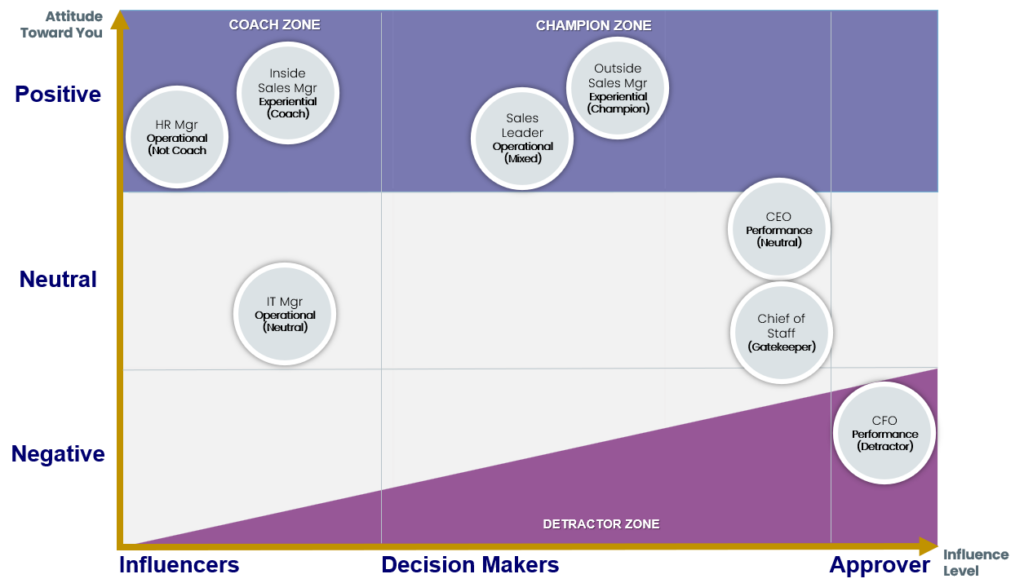
First, map the current state of the account. In The CoNavigator Method, I call this Buyer Landscape Mapping: documenting who the players are in each key account, their level of influence, their attitude toward you, and their role in decisions. Most companies, when they attempt this at all, do it blindfolded, spun around, and overly confident. The map gets built from assumptions and optimism rather than evidence. I jokingly call Buyer Landscape Mapping the business version of Pin the Tail on the Donkey: the skill is in placing every stakeholder and their buyer type and buyer role, in their correct spot on the map, considering those factors and their influence and attitude. Not by guessing, assuming, or hoping.
For each of the veteran’s key accounts, name the stakeholders, score the relationships truthfully, and ask the uncomfortable question: if Ray disappeared tomorrow, who in this account would take our call? If the answer is one name, or no name, you’ve found your exposure. A seven-figure account hanging on a single handshake is not a relationship. It’s a liability.
Multithread the Accounts
Second, multithread before the transition, not during it. Introduce the successor while the veteran still has equity to spend. Add technical specialists, inside sales partners, and executive sponsors to the accounts that matter most, so the customer experiences a team rather than a person. And keep qualifying. Ongoing qualification means watching for changes: new decision makers, shifting priorities, a competitor suddenly getting meetings. Those changes matter in any account. During a transition, they’re everything.
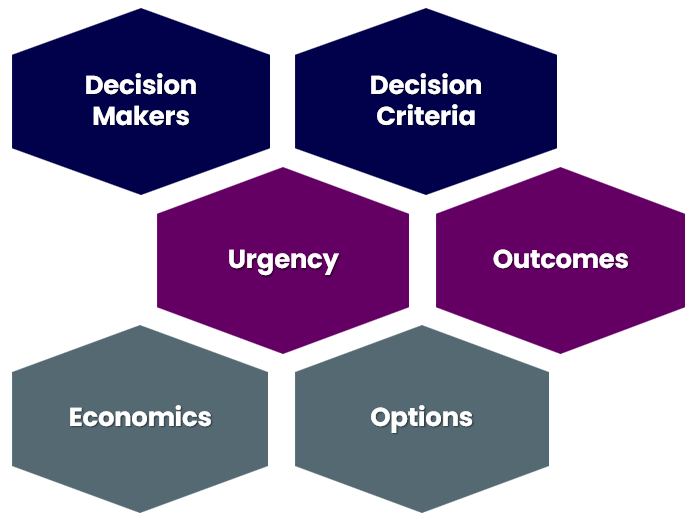
Solve the Comp Problem

Third, deal with the money, because this is where good transition plans go to die. The veteran has no incentive to hand off accounts early. In many cases, a veteran’s final working years are also their highest-earning years, and Social Security calculates its benefit from a lifetime’s highest-earning years. Cutting Ray’s commission in year 31 doesn’t just cost him current income — it can quietly shrink one piece of his retirement income, on top of whatever else he’s counting on. Meanwhile, the incoming AM won’t spend a year developing someone else’s book for peanuts. And distributor margins don’t leave a lot of room to pay two people generously on the same revenue.
There’s no free lunch or Easy button here, so stop looking for one. What works is a deliberate overlap structure: split books with a glide path that shifts commission gradually from veteran to successor, transition bonuses tied to retention milestones (measured 12 and 24 months after the handoff), and paying the veteran explicitly for mentoring and knowledge transfer as part of the job, not as a favor. It costs money. So does losing the account. Price both and decide. And when in doubt or concerned, engage an expert compensation firm to help you develop a plan that your leadership team and board or investors can live with.
The default knowledge transfer plan in many distributors is “ride along for three months.” Loose plans like this leave too much to chance.
Capture What Ray Knows Before It Drives Away
Structured knowledge transfer means a repeatable, account-by-account debrief: the history of the relationship, commitments made (formal and informal), pricing agreements and how they came to be, service quirks and workarounds, each stakeholder’s goals and pet peeves, and every open thread. Treat it like the interviews you’d conduct if you were writing the biography of the account, because that’s what you’re doing.
Then make it findable. Sales enablement platforms like Allego (I’ve worked with them since 2017 and fully endorse them) and similar content management systems are built for exactly this: short, searchable videos of Ray walking through each major account, in his own words, that the new AM can revisit six months later when a situation Ray predicted actually happens. A binder gets written once and never opened. A series of three-minute, searchable videos gets watched, during transition and on-demand, as needed.
Make Your CRM the Brain of the New AM

Here’s a simple test: pick one of your veteran’s top ten accounts and read the CRM record. If a stranger read it, could they have an intelligent conversation with that customer next week?
For most distributors, the honest answer is no. And that’s the problem in one sentence: if it isn’t in the CRM, it retires with the rep.
CRM data quality is usually framed as an administrative annoyance, something sales managers nag about and reps grudgingly minimally comply with. Reframe it. Complete account records, documented relationships, buying history with context, and current opportunities are succession assets. The company that treats CRM hygiene as a succession issue builds a brain the new AM can actually use. The company that doesn’t hand its new AM a phone book.
Account Planning Makes Handoffs Survivable

If you’ve read my work here before, you knew this was coming. Living account plans, the kind that get reviewed and updated in a regular cadence rather than built annually and filed, change the nature of a transition entirely. (I laid out the full process in How to Build Key Account Plans That Get Results, right here on the Distribution Strategy Group blog.)
With a real account plan, the new AM inherits the account’s history and direction already worked out: the COIN-OP analysis (Challenges, Opportunities, Impacts, Needs, Outcomes, Priorities), the PCF-L account objective (Past Performance, Current Performance, Future Potential, and Likelihood — the analysis that determines whether an account should be Acquired, Grown, Retained, Reactivated, or Retired), the buyer landscape and relationship map, the growth strategy, current initiatives, and the open risks. The transition becomes a driver change, not a rebuilt race car on a new track. The race, the car, and the course don’t change just because someone new is behind the wheel. Without a plan, the new AM isn’t taking over a lap in progress — they’re handed the keys to a car they’ve never driven, on a track nobody mapped for them, mid-race.
Don’t Forget Who This Is Hardest On: Your Customers
Amid all the internal planning, remember that the customer didn’t ask for any of this. From their side, a trusted advisor is leaving and an unknown is arriving. Handled badly, a transition feels like a downgrade they have to tolerate. Handled well, it can actually strengthen the relationship.
Two concepts from my value drivers work apply here.
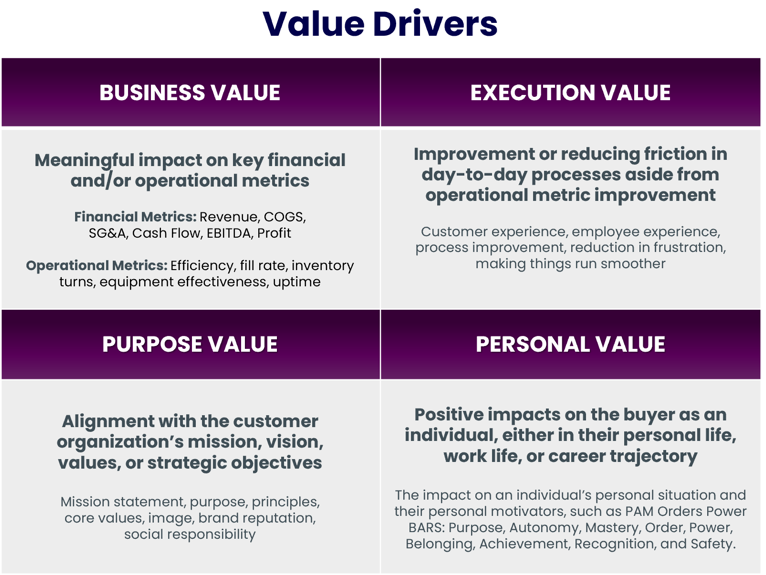
Execution Value is the value of making things run smoother: reducing friction in day-to-day processes and interactions. Purpose Value is alignment with the customer’s mission and strategic objectives. A well-run transition delivers both. Low friction, because the customer never has to educate the new AM on their history, their pricing, or their quirks. And genuine upside, because a transition is the perfect occasion for a forward-looking business review: fresh eyes on the account, a re-examination of the customer’s goals, and visible proof that the company, not one individual, stands behind the relationship.
Plan the customer communication with the same care as the internal plan. Who tells them, when, and how. What they hear about continuity and what they see that proves it. The goal is a customer who finishes the transition thinking, “That was easier than I expected, and our new rep seems well-informed, caring, and attentive.”
Closing Thoughts
The retiring rep problem is not a surprise. The demographics have been public for years, the pattern is well known, and every distribution executive can name the veteran reps whose departures would hurt. What’s missing in most companies isn’t awareness. It’s a system: retirement forecasting owned at the executive level, honest buyer landscape and relationship mapping, multithreading done early, compensation structures that make the handoff workable, structured knowledge capture, CRM records that function as a brain/memory aid, account planning discipline, and a customer experience that turns a risky moment into a moment of value.
Distributor B isn’t a fantasy. It’s a set of decisions, made before the announcement instead of after it.
Because somewhere in your sales force right now, a rep is planning a retirement you haven’t forecasted. Do you know who? And if they walked into your office Monday morning and gave you four months, could you name every relationship and the associated revenue that walk out with them?
If yes, congratulations on the purposeful management of the silver tsunami. If not, you have some work to do and a way to go about it.
Share this article: