




Why This Matters to Distributors: Falling energy, fuel and freight costs provided distributors some relief in July, but producer prices remained 4.7% higher than a year earlier and several business input costs continued to rise.
U.S. wholesale prices were unchanged in July as declines in energy, food and freight costs offset higher prices for services and construction, according to federal data released Thursday.
The Producer Price Index for final demand was flat in July after falling 0.1% in June and rising 0.5% in May, the U.S. Bureau of Labor Statistics said. Producer prices were 4.7% higher than a year earlier.
The July report showed easing costs in several areas important to distributors, particularly fuel and transportation. But the year-over-year increase and continued gains in some business input costs suggest distributors are still operating in a higher-cost environment.
Prices for final demand goods fell 0.7% in July after declining 1.4% in June. Energy prices dropped 3.1%, and food prices declined 0.9%. Prices for goods excluding food and energy edged up 0.1%.
Gasoline prices fell 5.7% and accounted for more than half of the decline in goods prices. Prices also fell for diesel fuel, jet fuel, residual fuels and thermoplastic resins and materials. Motor vehicle and equipment prices increased 0.3%, while electric power and grain prices also rose.
Freight costs also declined. Prices for final demand transportation and warehousing services fell 1.8%, including a 1.8% decrease in truck freight transportation prices.
The declines were offset by higher prices elsewhere. Final demand services rose 0.2%, while construction prices increased 2.2%.
A measure that excludes food, energy and trade services increased 0.4% in July after rising 0.1% in June. That index was also 4.7% higher than a year earlier.
Business Input Costs Remain Elevated
Prices further up the supply chain also showed declines in energy-related costs but continued pressure in other categories.
Prices for processed goods sold to businesses as inputs fell 0.6% in July after declining 1.1% in June. Processed energy prices dropped 3.1%, while processed food and feed prices fell 0.5%. Prices for processed materials excluding food and energy edged up 0.1%.
Despite the monthly decline, prices for processed goods for intermediate demand were 9.9% higher than a year earlier.
Diesel fuel prices in that category fell 6.7%. Prices also declined for jet fuel, basic organic chemicals, gasoline and thermoplastic resins and materials. Lumber prices, however, increased 5%.
Prices for unprocessed goods sold to businesses fell 1.8% in July after dropping 6.4% in June. The decline was driven by a 7.4% decrease in unprocessed energy materials. Crude petroleum prices fell 11.9%.
Business service costs moved in the opposite direction. Prices for services for intermediate demand rose 0.5% in July and were 5.1% higher than a year earlier. Trade-service margins increased 0.7%, while transportation and warehousing services fell 0.5%.
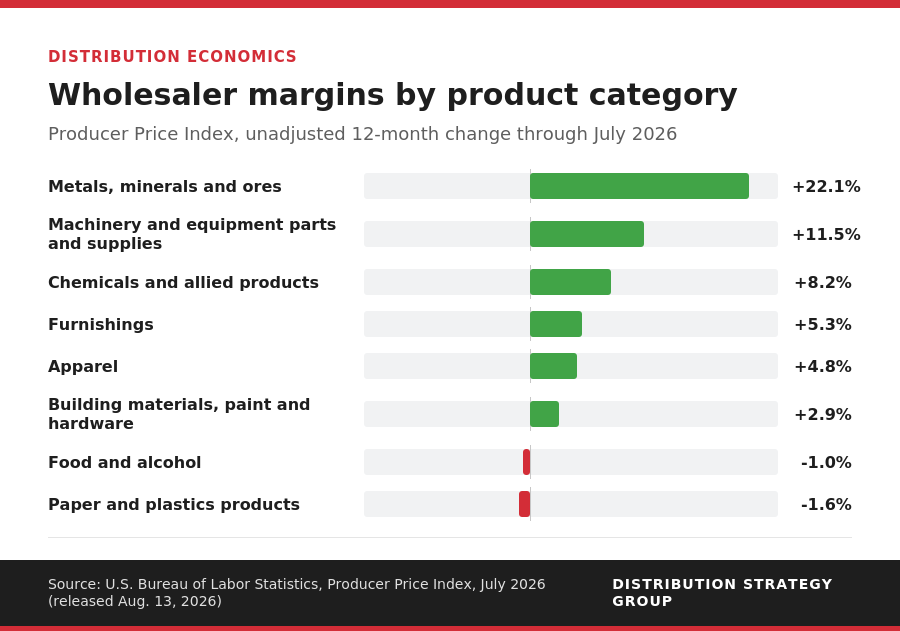
BLS also reported higher margins for food and alcohol wholesalers and machinery and equipment parts and supplies wholesalers. Building materials, paint and hardware wholesaling declined.
The July figures leave distributors with a mixed cost picture. Lower fuel, freight and energy prices could reduce near-term operating and transportation costs, but producer prices remain above year-ago levels, while processed business inputs and services continue to carry significant increases.
BLS is scheduled to release August producer price data Sept. 10.
Do not miss any content from Distribution Strategy Group. Join our list.
Share this article:
