



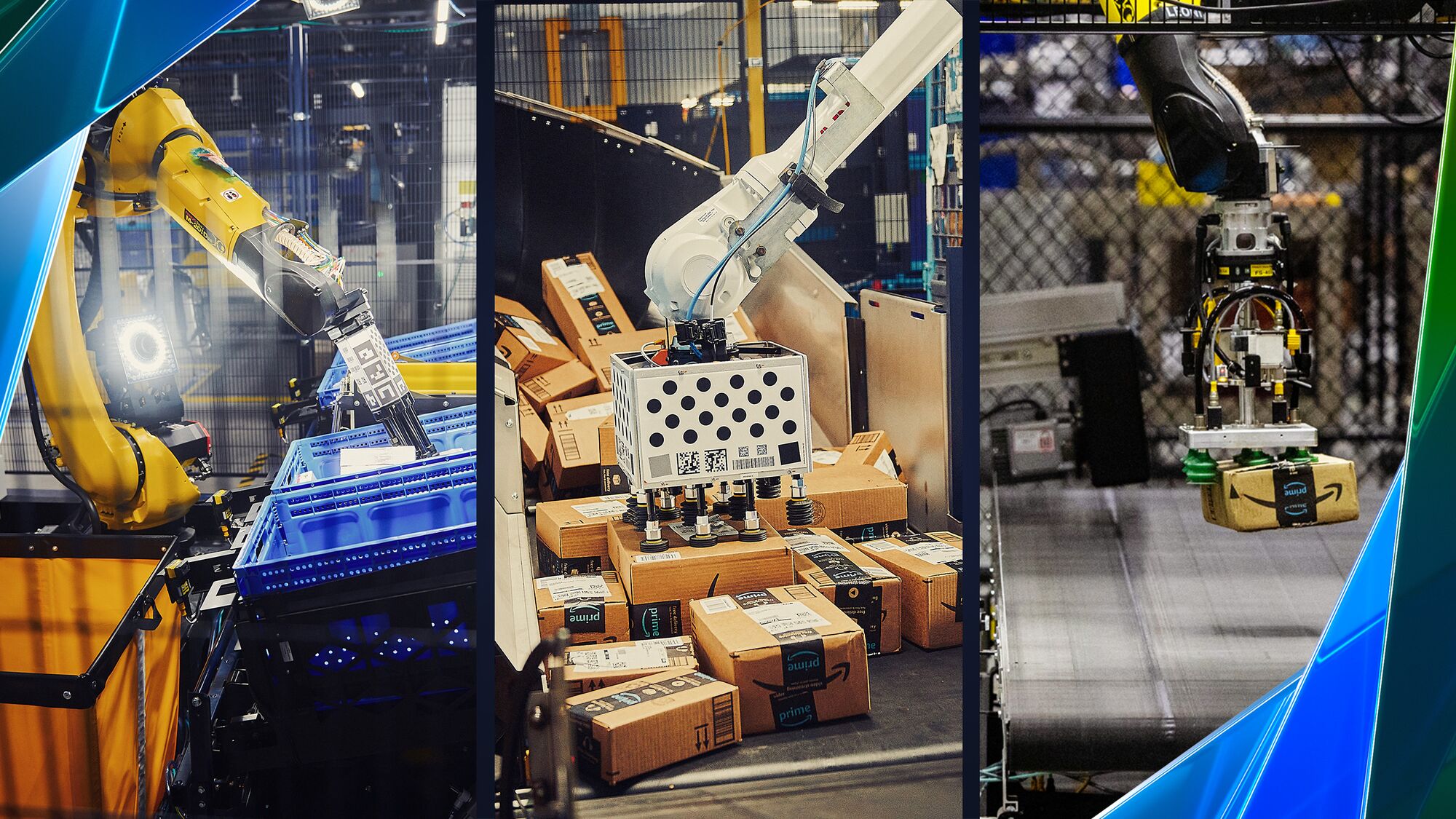
Why This Matters to Distributors: Amazon’s latest robotics initiative highlights how artificial intelligence is simplifying warehouse automation. As robots become easier to direct and deploy, distributors may face increasing pressure to evaluate automation technologies that can improve fulfillment efficiency and productivity.
Amazon.com Inc. unveiled a next-generation version of its autonomous Proteus warehouse robot on June 4 that can respond to natural-language instructions from employees, part of a broader effort to expand automation across its fulfillment network.
The announcement came during Amazon’s Delivering the Future event near London, where the company also outlined plans to invest more than €10 billion ($11.6 billion) in its European fulfillment network and create 25,000 jobs across Europe.
The upgraded Proteus robot represents a notable change in how employees interact with warehouse automation. Rather than relying on specialized software commands, workers can assign tasks using conversational prompts.
“You tell it what needs to be done. It figures out the priority, the route, the timing,” Scott Dresser, vice president of Amazon Robotics, said during the event.
Amazon said the current Proteus robot operates at 25 U.S. sites and is limited to dock areas, where it moves carts weighing 400 kilograms, or about 882 pounds. The next-generation version can operate throughout fulfillment centers and delivery sites, allowing it to move materials wherever they are needed.
The company said the new system is being piloted in Amazon laboratories, with deployment in Europe planned for the first half of 2027.
Amazon also introduced STARK, a robotic tote-handling system first piloted in Barcelona, Spain. The company said the technology is scheduled to expand to 15 European sites by 2027.
In addition, Amazon highlighted Vulcan, which it describes as its first robot with a sense of touch. The system uses sensors to identify and handle objects in densely packed storage environments and has expanded from its initial deployment in Spokane, Washington, to Amazon’s fulfillment center in Hamburg, Germany.
Amazon said it has hired hundreds of thousands of employees globally since introducing robotics into its operations and expects automation investments to create additional maintenance, engineering and reliability roles as the technology expands.
The company said the investments are intended to improve operational efficiency, increase workplace safety, and support faster delivery capabilities across its growing European fulfillment network.
Do not miss any content from Distribution Strategy Group. Join our list.
Share this article:
