
Distribution Events


Thought Leadership and Software for Wholesale Change Agents
Economics & Market Data
-

U.S. Industrial Leasing Jumps 49% as Companies Rework Distribution Networks
Persistent labor constraints and higher wages are accelerating investment in warehouse technology, according to JLL. Companies increasingly want buildings with the clear heights, power capacity and structural specifications required for robotics and other automated systems.
-

BFG Supply Files Chapter 11, Seeks Sale as Distributor Bankruptcies Mount
Court filings cited a series of operating and financial problems from fiscal 2024 through 2026, including declining revenue, tightening vendor credit, working capital constraints and broader pressure in the horticultural market.
-

Essendant Warns It May Cease Operations as Illinois Closures Put 644 Jobs at Risk
The Illinois notices, dated Aug. 3, cover Essendant’s corporate operation in Lincolnshire and a distribution facility in Carol Stream. Together, they identify 644 employees expected to lose their jobs beginning Oct. 3 or within 14 days after that date.
-
Lowe’s Targets More Pro Growth, Signals Additional Building Products Deals
Lowe’s is combining specialized distribution businesses with its store network, expanding contractor-focused assortments, investing in digital quoting and account-management tools, and building fulfillment capabilities designed to capture a larger portion of project spending.
-

GMS Acquires Evergreen Building Products, Expands Pacific Northwest Footprint
GMS operates more than 330 distribution centers in the U.S. and Canada, along with 100 tool sales, rental and service centers.
-

Home Depot Connects SRS, GMS to Broader Pro Growth Strategy
Home Depot is combining SRS, GMS, outside sales, digital tools, and faster delivery to pursue larger professional customers and capture more of their spending.
-

Industrial Production Rises 0.2% as Key Distributor Markets Gain Ground
Production and capacity utilization are rising in several electrical and industrial markets, while chemicals, primary metals and parts of the building materials sector continue to operate with substantial unused capacity.
-

Lowe’s Q2 Sales Rise 8.3% as Pro Business Drives Growth
The results show Lowe’s increasingly relying on its Pro business and acquisitions for growth as demand from its traditional DIY customers remains soft.
-
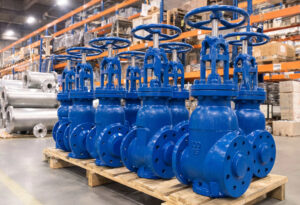
Main Street Capital Invests $39.3 Million in Midstream Valve Partners
The investment gives MVP additional financial resources as it competes in a flow-control distribution market that includes significantly larger national suppliers.
-

Home Depot Q2 Sales Rise 5.7% as Pro, Delivery Push Expands
SRS gives the company a specialized distribution network focused on professional customers, while its stores provide more than 2,000 additional local fulfillment points for rapid delivery.