

Why This Matters to Distributors: The multiyear period of soft freight rates and shipper leverage is over — J.B. Hunt’s first-quarter results confirm that transportation costs are rising structurally, not cyclically, and distributors who have not renegotiated carrier contracts or adjusted their 2026 cost models will face margin pressure that compounds with every passing quarter.
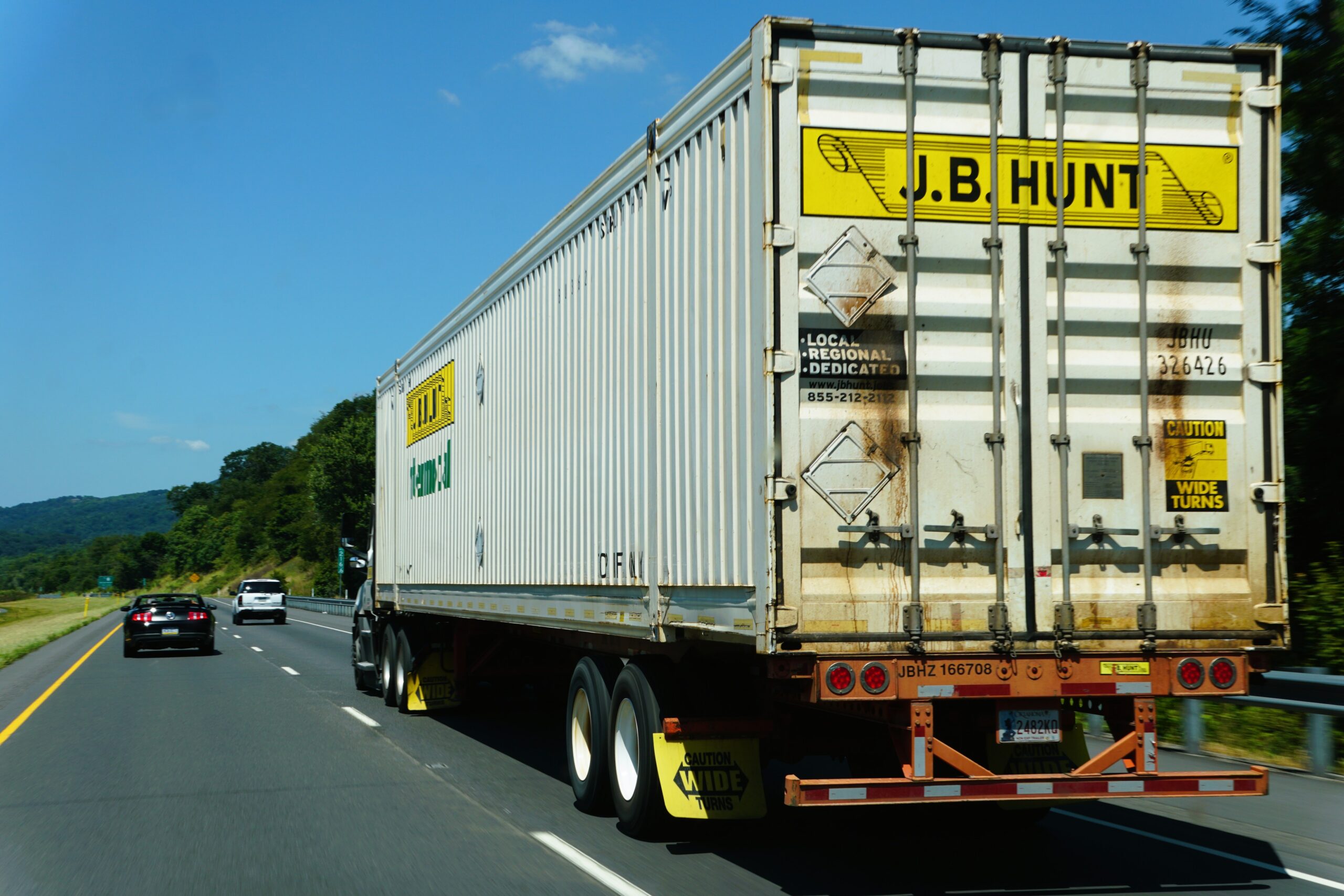
J.B. Hunt Transport Services reported first-quarter 2026 results that told two stories at once: a company posting its strongest operational performance in years, and a freight market undergoing a structural reset that executives said will raise transportation costs across the supply chain for the near future.
Total revenue for the quarter increased 5% to $3.06 billion. Operating income improved 16% and diluted earnings per share rose 27% compared with the same period a year earlier. But the more consequential message for wholesale distributors came not from the financial results themselves, but from what J.B. Hunt’s leadership said about the market that produced them.
“As we moved through the first quarter, the freight environment felt meaningfully different than what we have operated in over the past several years,” CEO Shelley Simpson said on the company’s April 15 earnings call. “Continued regulatory enforcement to improve safety in our industry has removed non-compliant capacity, and when combined with early signs of improved demand, resulted in a tighter truckload market throughout the quarter. While predicting inflection points is never precise, we believe we are on a path of recovery.”
That path of recovery, in freight market terms, means rising rates. For wholesale distributors who built their logistics budgets around four years of soft spot pricing and shipper leverage, the environment has changed.
A Supply-Driven Shift, not a Demand Spike
What makes this cycle different from previous freight recoveries, according to J.B. Hunt executives, is that the tightening is structural rather than cyclical. Capacity has not softened temporarily. It has permanently exited.
Spencer Frazier, J.B. Hunt’s executive vice president of sales and capacity solutions, offered the clearest articulation of that argument. “What we are seeing is a freight market that has fundamentally less slack than it did in prior cycles,” Frazier said. “Capacity has been steadily exiting for an extended period driven by regulatory enforcement, rising costs, and financial performance that does not support capital reinvestment. Even if spot rates increase, capacity continues to leave the industry.”
Frazier pointed to a specific set of market indicators to support that position. Truckload rates, tender rejections and the ISM Purchasing Managers Index are all at their highest level since 2022. Trucking employment is at its lowest level since 2022. He called those data points “proof points of structural change” rather than signals of a temporary seasonal tightening.
The driver supply picture is deteriorating alongside overall capacity. Nick Hobbs, executive vice president of people and human resources and head of J.B. Hunt’s Dedicated Contract Services operations, said driver availability has tightened to a degree the company had not seen in years. “Our current driver need is the highest it has been since June 2022,” Hobbs said. He attributed the compression to aggressive federal and state regulatory enforcement — including crackdowns on non-domiciled commercial driver’s license holders, the shutdown of truck driving schools and the suspension of electronic logging device providers — as the primary mechanisms removing supply from the market.
“You are seeing states like Indiana that just made an announcement — took 1,800 non-doms out,” Hobbs said. “You have seen the same thing in California. So you see a lot of states starting to enforce that.”
Customers Are No Longer Betting on a Return to Soft Rates
For much of the past year, shippers held a working assumption that capacity tightening was a temporary weather or seasonal phenomenon. J.B. Hunt said that assumption has collapsed.
“Throughout the first quarter, there has been an evolving narrative from customers that tightening in the truckload market would be temporary in nature,” Frazier said. “Today, most customers understand there has been and continues to be a shift in industry capacity that is impacting the truckload market, and this is a structural change.”
The behavioral shift is showing up in how shippers manage freight. Frazier said customers are conducting more frequent mini-bids rather than waiting for annual contract cycles, consolidating volume with fewer carriers and prioritizing service reliability over price. “We are seeing far less price-led decision making and far more focus on execution quality,” he said.
That shift carries direct implications for wholesale distributors, who for years benefited from plentiful spot capacity, competitive carrier pricing, and predictable contract rates. The ability to reroute a load to a cheaper carrier or rely on abundant spot availability to cover fleet gaps is becoming more constrained.
J.B. Hunt’s brokerage unit, Integrated Capacity Solutions, posted 20% revenue growth and 10% volume growth in the first quarter, with revenue per load up 9% year over year. Its dedicated truckload segment reported its fourth consecutive quarter of double-digit volume growth. Intermodal set a first-quarter volume record, including a single-week record of more than 46,000 loads delivered in March.
Rates Are Rising Across All Modes
The pricing trajectory, however, is uneven across modes. Frazier said spot pricing has moved first and fastest, followed by highway contract pricing on a lag of three to six months, with intermodal contract pricing moving last — typically on a six- to 12-month delay. That sequence, he said, mirrors the pattern of the two previous up-cycles: the ELD-driven tightening of 2017-18 and the demand shock of 2020-22.
Chief financial officer Brad Delco said the company expects pricing to exceed core inflation, though the timing remains uncertain. “The industry needs margin recovery — the industry needs better financial performance to support reinvestment,” Delco said. “So, I think that is probably the direction the industry is going to be heading.”
Rising fuel prices are compounding the pressure. Intermodal, as a more fuel-efficient option, becomes a stronger value proposition as diesel costs rise. Frazier said customers are increasingly asking about mode conversion — shifting freight from truck to rail — as a cost-management strategy. That dynamic pushed intermodal volume growth to 8% in March alone, compared with flat or slightly negative results in January and February.
Darren Field, executive vice president and president of intermodal operations, said the Eastern network, where intermodal competes more directly with truckload, is leading the volume recovery. The Eastern segment grew 7% in the first quarter on top of 13% growth in the same period a year earlier.
For Wholesale Distributors, the Reset is Already Underway
The J.B. Hunt earnings call delivered a clear signal about the cost environment for the rest of 2026 and into 2027. Transportation budgets built around the soft freight market of 2023 and 2024 are facing meaningful pressure. Contract rates are repricing upward. Spot rates have already moved. The supply of available capacity is not expected to recover, given the regulatory enforcement, rising operating costs and inadequate carrier returns that Frazier described as self-reinforcing.
The timing of the reset also intersects with tariff-driven inventory movements that are already straining transportation networks. Import volumes, according to the Federal Reserve’s April 2026 Beige Book, continue to grow even as shipping costs rise, as importers accelerate receipts ahead of potential further tariff increases. That combination — surging import volumes alongside tighter domestic truckload capacity — will create freight competition at both ends of the supply chain simultaneously.
Simpson closed the earnings call with language that positioned J.B. Hunt as the beneficiary of that uncertainty. “Any time that happens, for whatever reason, our customers become more interested in our ideas around creating a more efficient way of transportation,” she said. “I think our pipelines are up as they are thinking about who can I go to, who do I trust.”
The four-year freight downturn that held transportation costs in check has ended. The question for distributors is not whether rates are rising, but how fast the repricing moves and how much of it can be absorbed before it reaches the products they move.
Do not miss any content from Distribution Strategy Group. Join our list.
Share this article:
