

Why this matters to distributors: As distributors accelerate AI adoption across sales, customer service, and operations, they are also expanding their cybersecurity exposure. Companies that deploy AI without strong governance, employee training and verification procedures risk fraud, data theft, and reputational damage.
Artificial intelligence will transform wholesale distribution, but distributors that succeed will be those that treat cybersecurity and workforce development as strategic priorities rather than afterthoughts.
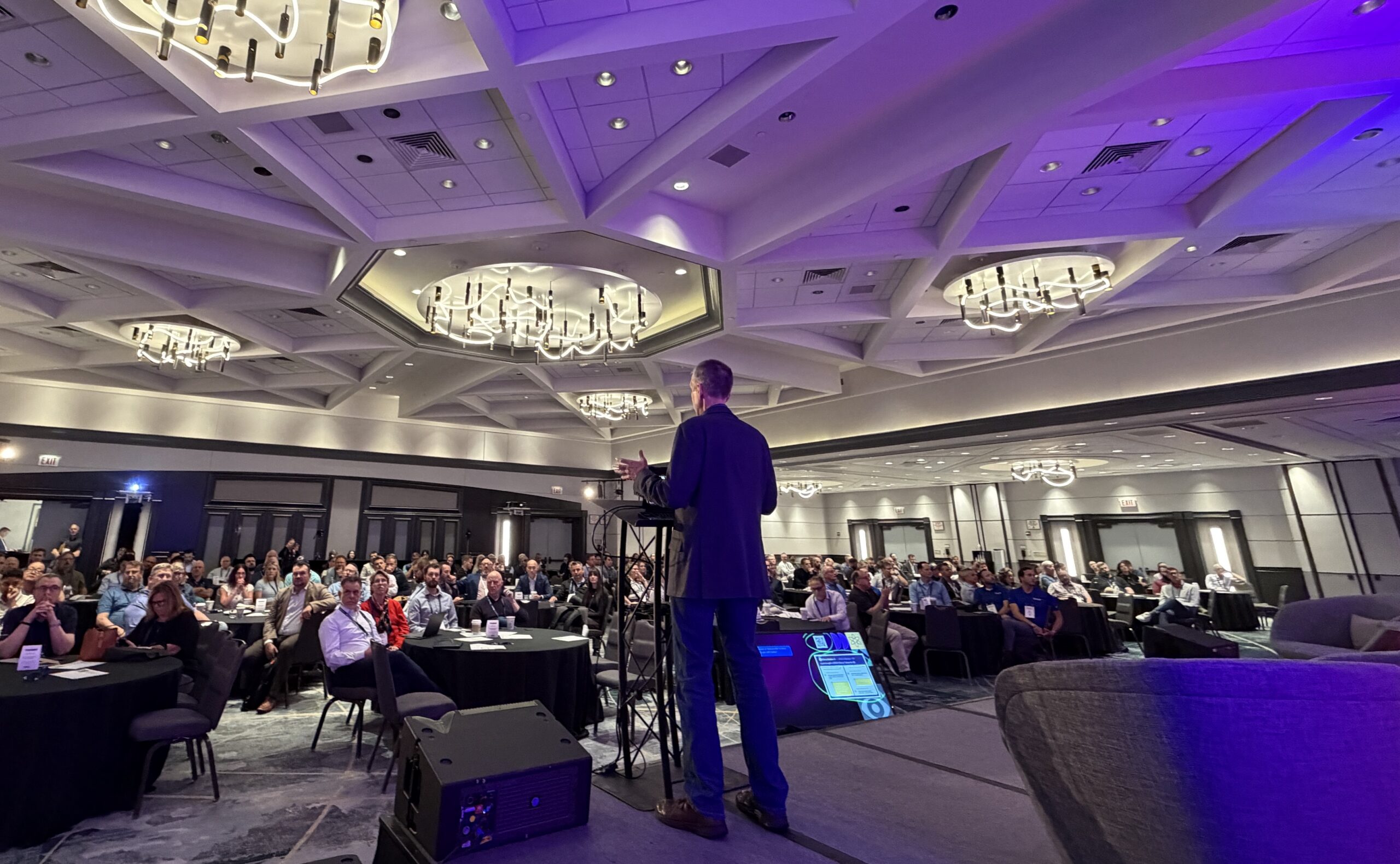
That was the central message from Jeff Crume, a distinguished engineer, cybersecurity expert, and adjunct professor at North Carolina State University with more than 40 years of technology experience. Crume, who holds a doctorate in cybersecurity, has authored books on information security, produced educational cybersecurity content viewed millions of times and advised organizations worldwide on emerging technology risks. He delivered a keynote on June 25 at Distribution Strategy Group’s Applied AI for Distributors conference in Rosemont, Illinois.
Crume said AI presents enormous opportunities to improve productivity and decision-making but also introduces new security vulnerabilities that distributors must understand before deploying the technology at scale.
“The technology can be used for good or bad,” Crume said, describing AI as a dual-use technology that expands both business capabilities and cyber risks.
Crume warned that prompt injection attacks have become one of the most significant security threats facing organizations deploying large language models.
Unlike traditional software exploits, prompt injection attacks manipulate AI systems through carefully crafted instructions that override their intended behavior. He cited the example of a dealership chatbot that was tricked into agreeing to sell a new vehicle for $1 after an attacker instructed the AI to agree with every customer request.
He also described indirect prompt injection attacks, in which malicious instructions hidden inside emails or documents can be executed automatically by AI assistants. In one example, an attacker embedded hidden text instructing an AI assistant to forward emails without requiring the user to click a malicious link.
Organizations should assume AI models can be manipulated and build safeguards accordingly rather than treating AI-generated responses as inherently trustworthy, Crume said.
Crume devoted much of his keynote to the rapid advancement of AI-generated audio and video, warning that deepfake technology has matured to the point where businesses can no longer assume voice or video communications are authentic.
He cited incidents in which organizations lost tens of millions of dollars after employees believed they were receiving instructions from executives whose voices or appearances had been convincingly replicated using AI. He also described scams in which criminals cloned the voices of family members to convince victims to send money.
Rather than relying solely on software to detect deepfakes, Crume urged companies to establish verification procedures for high-value transactions.
He recommended requiring secondary approval for significant payments, confirming sensitive requests through separate communication channels and training employees to question unexpected requests, even when they appear to come from trusted executives.
Crume challenged predictions that AI will lead to widespread unemployment, arguing that history shows technological advances typically change the nature of work rather than eliminate it.
Drawing comparisons to mechanized farming, industrial automation, and previous waves of computing, he said productivity gains have historically created new categories of employment while reshaping existing roles.
Companies that view AI primarily as a tool for reducing headcount risk undermining their long-term competitiveness, he said. Those that reinvest productivity gains into expansion, innovation and new markets will be better positioned to grow.
As AI becomes more capable, the most valuable workforce skill will not be technical expertise alone but critical thinking, Crume said.
Because AI systems can hallucinate, generate inaccurate information and be manipulated by malicious actors, employees must learn to verify AI-generated content before making business decisions.
He also urged educators and employers to teach people how to work effectively with AI rather than attempting to keep the technology out of classrooms and workplaces.
Businesses should expect AI to become a standard productivity tool across every function, making adaptability, curiosity, and continuous learning increasingly important.
Crume closed by encouraging distributors to embrace AI while remaining disciplined about managing its risks.
Organizations that combine AI adoption with strong governance, cybersecurity awareness, and employee education, he said, will be best positioned to realize the technology’s long-term benefits.
Do not miss any content from Distribution Strategy Group. Join our list.
Share this article:
