



Why This Matters to Distributors: April’s sales gain provided a needed lift for HVAC distributors carrying elevated inventory levels, but broader market growth remains modest and heavily dependent on weather-driven demand through the peak cooling season.
HVAC wholesale distributors reported a 4.5% increase in sales in April compared with the same month a year earlier, helped by above-normal temperatures across much of the U.S., according to monthly data released by Heating, Air-conditioning, and Refrigeration Distributors International.
The April results pushed 12-month sales growth to 2.8% through April 2026, according to HARDI’s monthly TRENDS report. The association represents more than 570 distributor members operating at more than 5,000 branch locations across North America and Latin America.
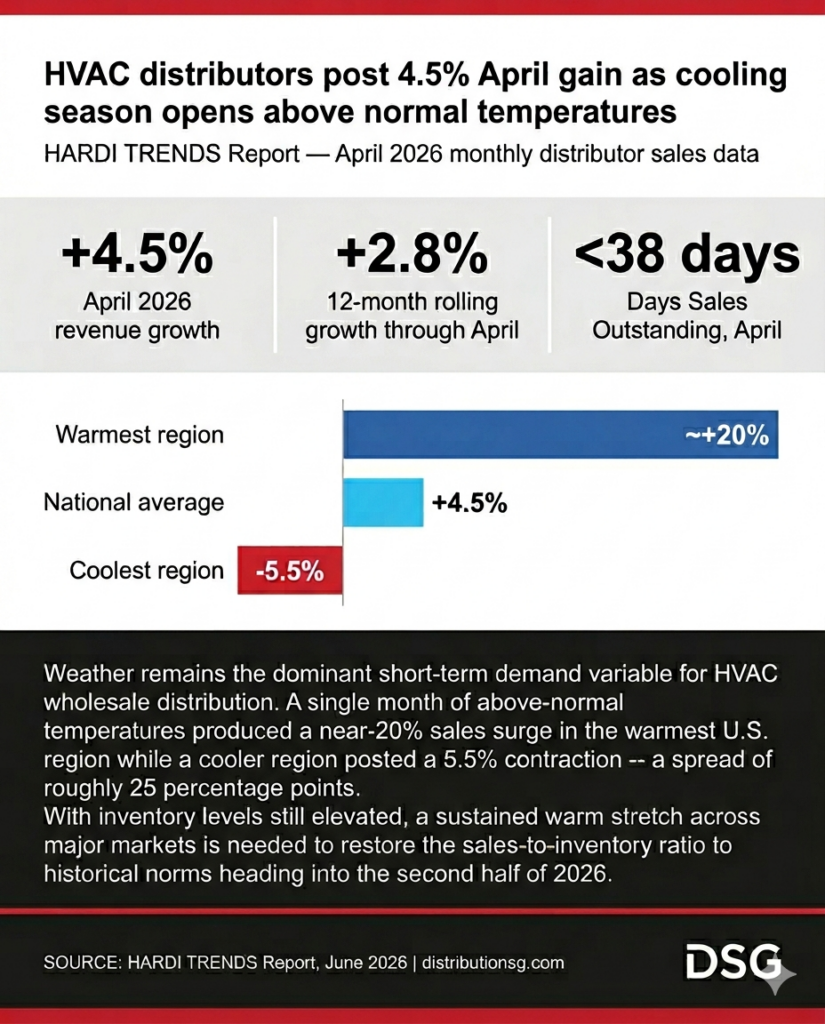
Performance varied significantly by region. HARDI’s warmest region posted sales growth approaching 20%, while the region experiencing below-normal temperatures recorded a sales decline of 5.5%.
“April is the first month of cooling season and this year began with above normal temps in more than half the country,” said Brian Loftus, HARDI’s senior market analyst.
Customer payment trends remained stable. Days Sales Outstanding, a measure of how quickly distributors collect payment on invoices, was less than 38 days in April, in line with the prior year and slightly better than April results recorded from 2022 through 2024. Loftus said the data indicates that contractors and end-market customers remain financially healthy.
Despite the stronger April performance, industry growth remains subdued. Loftus cited sluggish existing-home sales, a soft labor market and persistent inflation as factors limiting demand growth.
Inventory levels also remain elevated across the channel. HARDI said distributors are looking to a strong summer cooling season to reduce inventories and return sales-to-inventory ratios closer to historical norms.
“We are rooting for a successful selling season to trim the inventory levels, which will allow the sales-to-inventory ratio to get back to normal by football season,” Loftus said.
The report underscores the extent to which weather continues to influence HVAC distributor performance. Regional sales results differed by 25 percentage points between the warmest and coolest markets, highlighting the impact local temperatures can have on demand for residential and light commercial HVAC equipment.
At the same time, the 2.8% rolling annual growth rate suggests the industry continues to expand at a measured pace despite headwinds in housing and broader economic uncertainty. The strength of demand through the summer months will determine how quickly distributors can reduce inventory levels and improve operating conditions heading into the second half of the year.
Do not miss any content from Distribution Strategy Group. Join our list.
Share this article:
