




Why This Matters to Distributors: Wholesale demand remained resilient across much of the country, fueled by reshoring, data center construction and defense spending. But higher freight, energy and material costs continued to squeeze margins, leaving many distributors unable to fully recover rising expenses through price increases
Wholesale distributors reported steady growth across much of the United States in late May and June as reshoring, data center construction and defense spending offset higher freight costs, tariffs and supply chain disruptions, according to the Federal Reserve’s July Beige Book.
The report, released Wednesday and based on information collected through July 6, said economic activity expanded at a slight to moderate pace in 11 of the Federal Reserve’s 12 districts. Manufacturing activity also increased in most districts, supported by stronger demand from industrial, defense and technology markets.
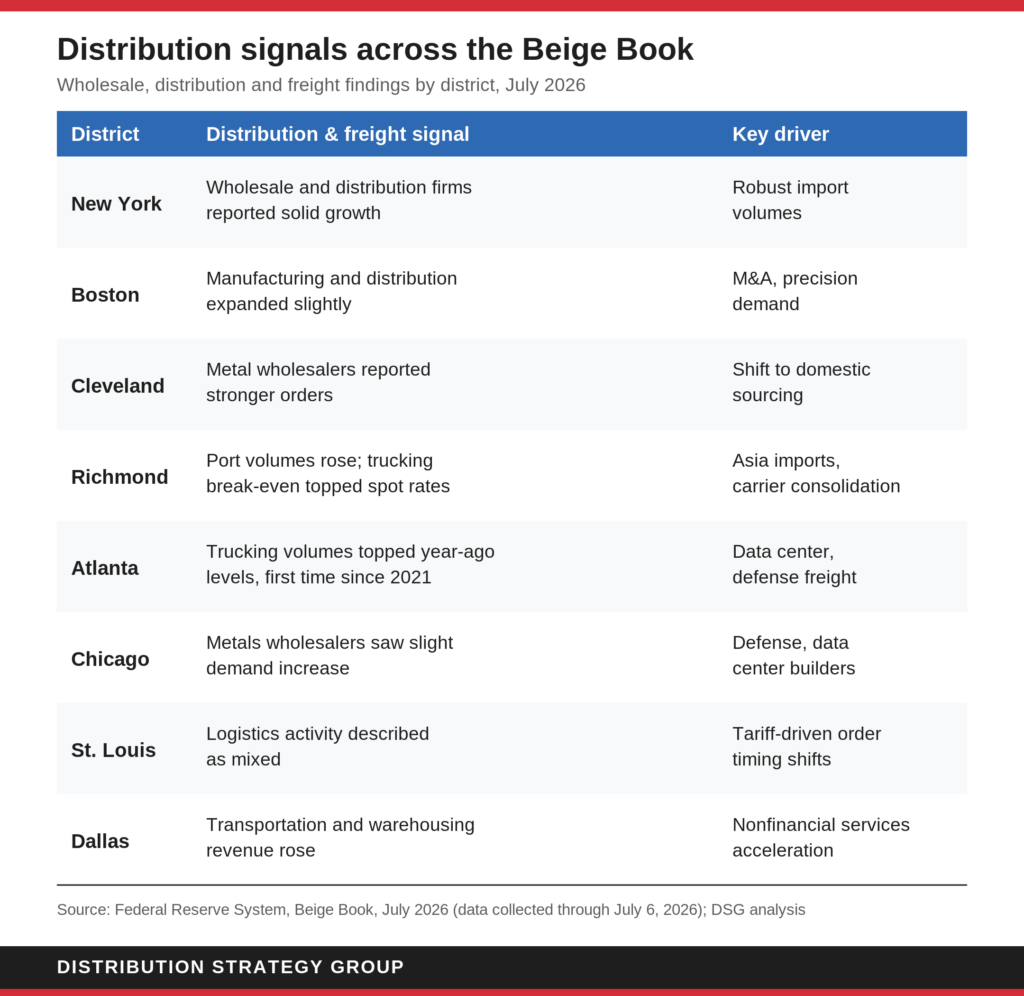
Among the strongest reports came from the New York district, where the Federal Reserve said wholesale and distribution companies reported solid growth despite higher transportation costs and continued uncertainty surrounding tariffs. A shipping company cited strong import volumes across a broad range of products even as ocean freight rates climbed.
Manufacturers in the district also reported stronger orders and shipments, although longer supplier lead times prompted some companies to increase delivery estimates for products not already in inventory.
The report pointed out tariffs as an increasingly important factor in sourcing decisions.
In the Cleveland district, metal producers said customers shifted purchases from imported products to domestic suppliers as inventories of imported goods declined and tariffs increased the cost of sourcing overseas.
The Boston district cited growing demand for precision manufacturing tied to defense and industrial automation markets, while the Chicago district reported stronger sales of primary metals to defense contractors and data center construction projects.
Freight markets also continued to adjust to shifting trade patterns.
The Richmond district reported moderate growth in cargo volumes at regional ports as importers increased shipments from Asia and adjusted supply chains in response to tariff uncertainty. Contacts also said stricter regulatory enforcement has shifted freight toward licensed trucking companies, tightening available capacity.
In the Atlanta district, freight brokers reported year-over-year shipment growth for the first time since 2021. Demand was strongest from data center construction, machinery, aerospace and defense customers, while higher trucking costs prompted some shippers to move more freight by rail.
Conditions were less consistent elsewhere.
The St. Louis district described transportation activity as mixed. Some logistics companies said customers accelerated shipments ahead of potential tariff increases, while others reported canceled orders after tariff announcements disrupted sourcing plans.
The Dallas district reported stronger transportation and warehousing activity as service-sector demand accelerated.
Across nearly every district, rising costs remained the biggest challenge.
The national summary said businesses continued to report higher costs for transportation, energy and raw materials. Several districts said selling prices failed to keep pace with higher input costs, reducing profit margins.
In the Kansas City district, businesses said inflationary pressures continued to compress margins, leading companies to selectively raise prices while investing in technology and other efficiency improvements to offset higher operating costs.
Overall, the Beige Book suggests distributors entered the second half of 2026 with healthy demand across many industrial markets but continued pressure on profitability. Growth tied to reshoring, defense spending and data center construction helped support sales, while higher transportation, energy and sourcing costs continued to challenge distributors’ ability to protect margins.
Do not miss any content from Distribution Strategy Group. Join our list.
Share this article:
