




Why This Matters to Distributors: July’s weaker-than-expected jobs report reinforces signs that the economy is slowing. While softer hiring could temper demand across key industrial markets, easing wage pressures and the prospect of lower interest rates could improve operating conditions later this year.
The U.S. labor market weakened in July, adding to evidence that economic growth is losing momentum and presenting wholesale distributors with a more challenging demand environment heading into the second half of 2026.
U.S. employers cut 23,000 jobs in July, the first monthly decline in payrolls since 2020, while the unemployment rate held at 4.1%, according to the Bureau of Labor Statistics. The government also revised May and June payroll gains lower by a combined 103,000 jobs, indicating the labor market had been slowing more than previously reported.
The weaker report arrives as many distributors are already describing a more cautious operating environment. Second-quarter earnings from publicly traded distributors point to slower end-market demand, with executives increasingly emphasizing productivity, artificial intelligence, inventory management and acquisitions over broad hiring or rapid expansion.
Employment was little changed in manufacturing, construction, wholesale trade, and transportation and warehousing — sectors that collectively drive much of wholesale distribution demand. The lack of job growth suggests businesses remain cautious about capital spending and production despite signs that some industrial markets are stabilizing.
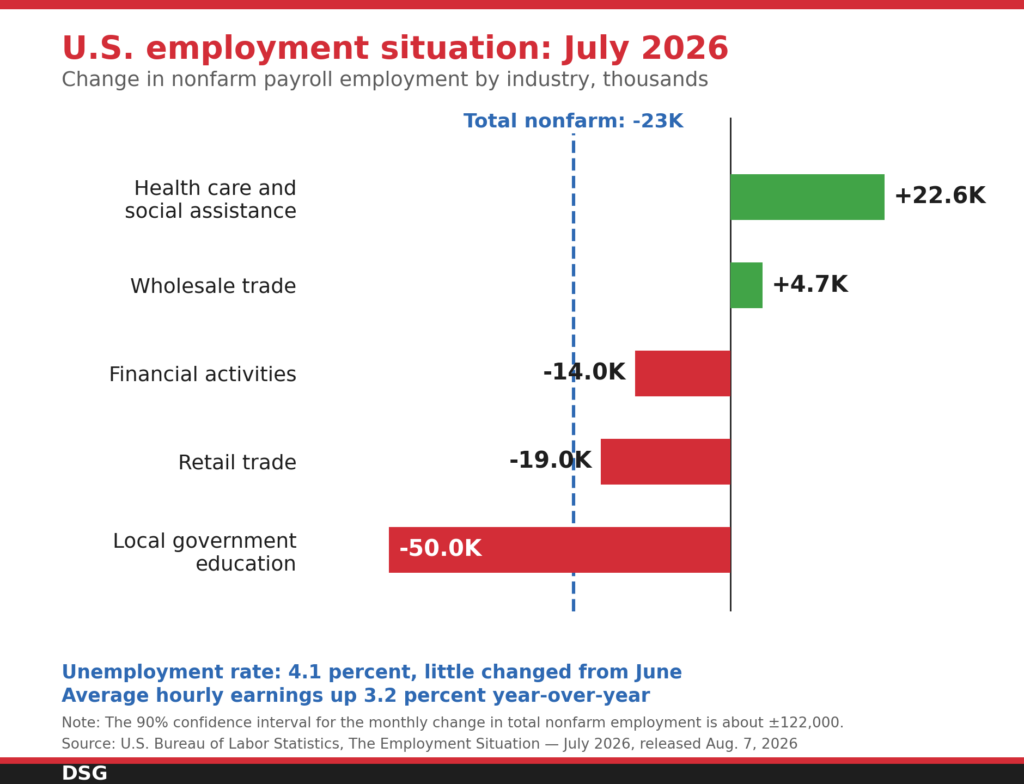
Among the largest employment changes in July, local government education lost 50,000 jobs, retail trade shed 19,000 positions and financial activities declined by 14,000. Health care remained a bright spot, adding 22,000 jobs.
For distributors, slower hiring typically translates into softer demand for industrial supplies, construction products, maintenance, repair and operations products, and other categories tied to business investment and economic activity.
At the same time, a cooling labor market could ease one of distributors’ largest operating expenses. Average hourly earnings increased 3.2% from a year earlier, continuing the moderation in wage growth that began last year. The labor force participation rate slipped to 61.4%, extending to a gradual decline seen throughout 2026.
Labor remains one of the largest costs for wholesale distributors, particularly those operating extensive warehouses, transportation, and branch networks. Slower wage growth could help offset margin pressure even if sales growth continues to moderate.
The report also may strengthen expectations that the Federal Reserve could lower interest rates later this year if inflation continues to ease. Lower borrowing costs would benefit several distributor-served industries, including construction, manufacturing, housing, and capital equipment, where higher financing costs have weighed on customer spending.
Still, the employment report is unlikely to alter distributors’ near-term strategy.
Recent earnings reports from companies including Grainger, Graybar, Wesco, Henry Schein, and others show management teams concentrating on improving productivity, expanding digital capabilities, deploying artificial intelligence, and making targeted acquisitions rather than relying on a broad economic rebound to drive growth.
Taken together, July’s payroll decline, downward revisions to prior months and moderating wage growth suggest the U.S. economy is entering a slower phase.
For wholesale distributors, the message is increasingly clear: Companies that improve execution, control costs, and continue investing in productivity are likely to be better positioned than those waiting for stronger economic growth to return.
Do not miss any content from Distribution Strategy Group. Join our list.
Share this article:
