




Why This Matters to Distributors: Falling fuel and transportation costs could provide temporary relief for distributors, but persistent inflation in core goods and business services suggests supplier costs remain elevated and broad-based pricing pressure has yet to ease.
U.S. producer prices unexpectedly declined in June as lower energy costs offset continued inflation in services and core goods, offering distributors some relief after two months of sharp wholesale price increases.
The Producer Price Index for final demand fell 0.3% in June on a seasonally adjusted basis, the U.S. Bureau of Labor Statistics reported Wednesday. The decline followed gains of 0.6% in May and 1.1% in April. Despite the monthly decrease, producer prices remained 5.5% higher than a year earlier.
The drop was driven entirely by lower energy prices.
Final demand goods prices fell 1.4%, the largest monthly decline since July 2022, as energy prices dropped 6.4%. Gasoline prices plunged 12%, accounting for two-thirds of the overall decline in goods prices. Diesel fuel, jet fuel, crude petroleum, and thermoplastic resins also posted declines.
For distributors, lower fuel prices could reduce freight, delivery, and fleet operating costs. However, the report showed that inflation remains entrenched across much of the industrial supply chain.
Core producer prices continued to rise. Prices for final demand goods excluding food and energy increased 0.2% in June, while the index excluding food, energy and trade services rose 0.1%. That core measure was up 5.1% from a year earlier, indicating underlying inflationary pressures remain elevated despite June’s headline decline.
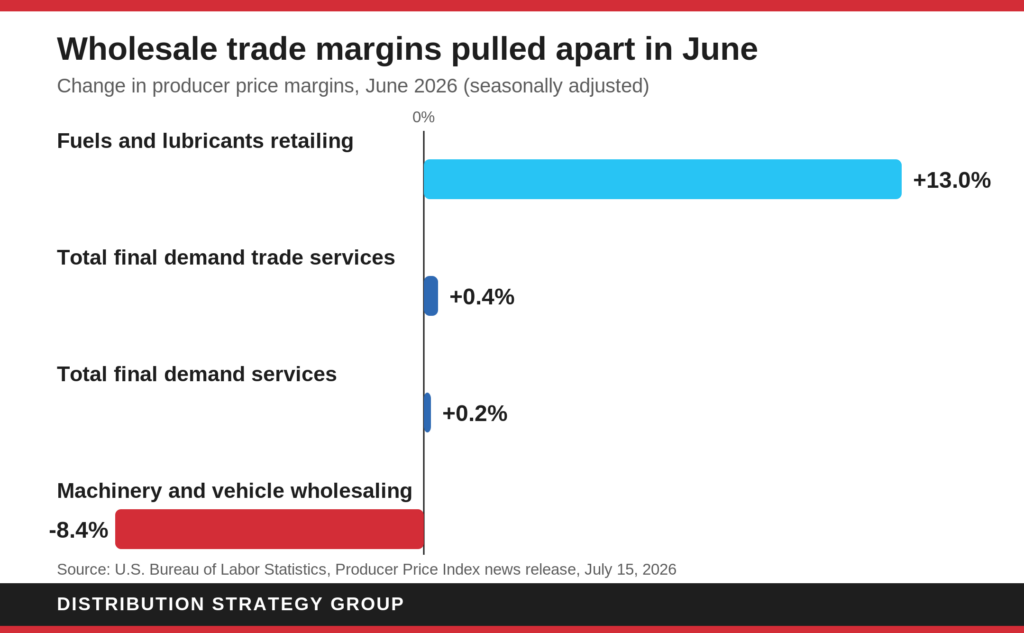
Service-sector inflation also continued to increase.
Prices for final demand services rose 0.2% in June after slipping 0.1% in May. More than 60% of the increase was driven by higher wholesale and retail trade margins, which rose 0.4%. Transportation and warehousing prices, by contrast, edged down 0.1%.
Within trade services, margins for machinery and vehicle wholesalers fell 8.4%, while food and alcohol wholesaling margins also declined. Offsetting those decreases were higher margins for fuels and lubricants retailers, securities brokerage firms, furniture retailers, and apparel retailers.
The report offered a mixed outlook for industrial supply chains.
Prices for processed goods purchased by manufacturers fell 1.2%, the largest monthly decline since December 2022, as processed energy goods dropped 7.3%. At the same time, processed materials excluding food and energy increased 0.6%, signaling that manufacturers continue to face higher costs for many industrial inputs.
Prices for unprocessed goods declined 4.1%, led by a 12.1% drop in crude petroleum. Grain, oilseed, and cotton prices also fell, while natural gas prices jumped 16.6%.
Business service costs continued to climb.
The index for intermediate demand services increased 0.3% in June after rising 0.6% in May and was up 5% over the past year. Higher prices for loan services, legal services, data processing, and insurance commissions outweighed declines in air mail and package delivery services.
The Producer Price Index measures prices received by producers before products reach consumers and is widely viewed as an early indicator of inflationary pressures moving through the supply chain. June’s report suggests that while falling energy prices provide a temporary break in wholesale inflation, distributors should continue to expect higher costs across many products and business services.
Do not miss any content from Distribution Strategy Group. Join our list.
Share this article:
