


Why This Matters to Distributors: Bosch’s acquisition of a major HVAC manufacturer and a 52-location distributor highlight a growing trend of suppliers expanding downstream into distribution. As manufacturers seek greater control over sales channels and customer relationships, independent distributors face increasing competition from vertically integrated rivals.
Bosch generated $18.8 billion in North American sales in 2025, up 8.7% from $17.3 billion in 2024, driven by growth across all four business segments and acquisitions that significantly expanded the company’s presence in the HVAC and building technology markets.
The German technology and industrial conglomerate reported results June 11, saying all its North American business sectors — Mobility, Consumer Goods, Energy and Building Technology, and Industrial Technology — posted year-over-year growth. Bosch employs approximately 41,000 people in North America and operates 20 manufacturing facilities in the United States.
“Our 2025 performance demonstrates the dedication of our team in the region and the economic resilience of our market,” Paul Thomas, president and CEO of Bosch in North America, said.
The company’s most significant moves during the year came in its Energy and Building Technology segment, which generated $2.5 billion in North American sales.
In August 2025, Bosch completed its acquisition of the residential and light-commercial HVAC business of Johnson Controls, adding the YORK and Hitachi brands to its Bosch Home Comfort portfolio. The deal expanded Bosch’s position in the North American heating, ventilation, and air conditioning market.
Two months later, Bosch strengthened its distribution footprint through the acquisition of US Air Conditioning Distributors LLC, a factory-direct HVAC distributor operating 52 locations across California, Arizona, Utah, and Idaho. The distributor employs 500 people and provides Bosch with direct access to contractors and customers throughout the western United States.
The acquisition gives Bosch a company-owned distribution platform in a region where many manufacturers continue to rely on independent distributors.
Industrial Technology sales rose to $1.4 billion in 2025 from $1.3 billion a year earlier despite continued softness in several industrial markets. The segment includes Bosch Rexroth and HydraForce, which supply hydraulic, automation and motion-control technologies.
Bosch said Bosch Rexroth is expanding into controlled-environment agriculture, where its ctrlX Automation platform is being used to support precision motion control and operational data management in commercial growing operations.
The company’s largest business segment, Mobility, generated $11.4 billion in North American sales. Bosch used CES 2026 to showcase several artificial intelligence-driven automotive technologies, including an AI-powered cockpit system designed to adapt to driver behavior and operating conditions.
Consumer Goods sales increased to $3.5 billion from $3.4 billion in 2024. The segment includes Bosch Home Appliances and Bosch Power Tools.
Bosch said its appliance business outperformed the broader market, posting sales growth of more than 5% during the year. The company also introduced Cook AI, an artificial intelligence-powered cooking assistant integrated with Bosch appliances and its Home Connect smart-home platform.
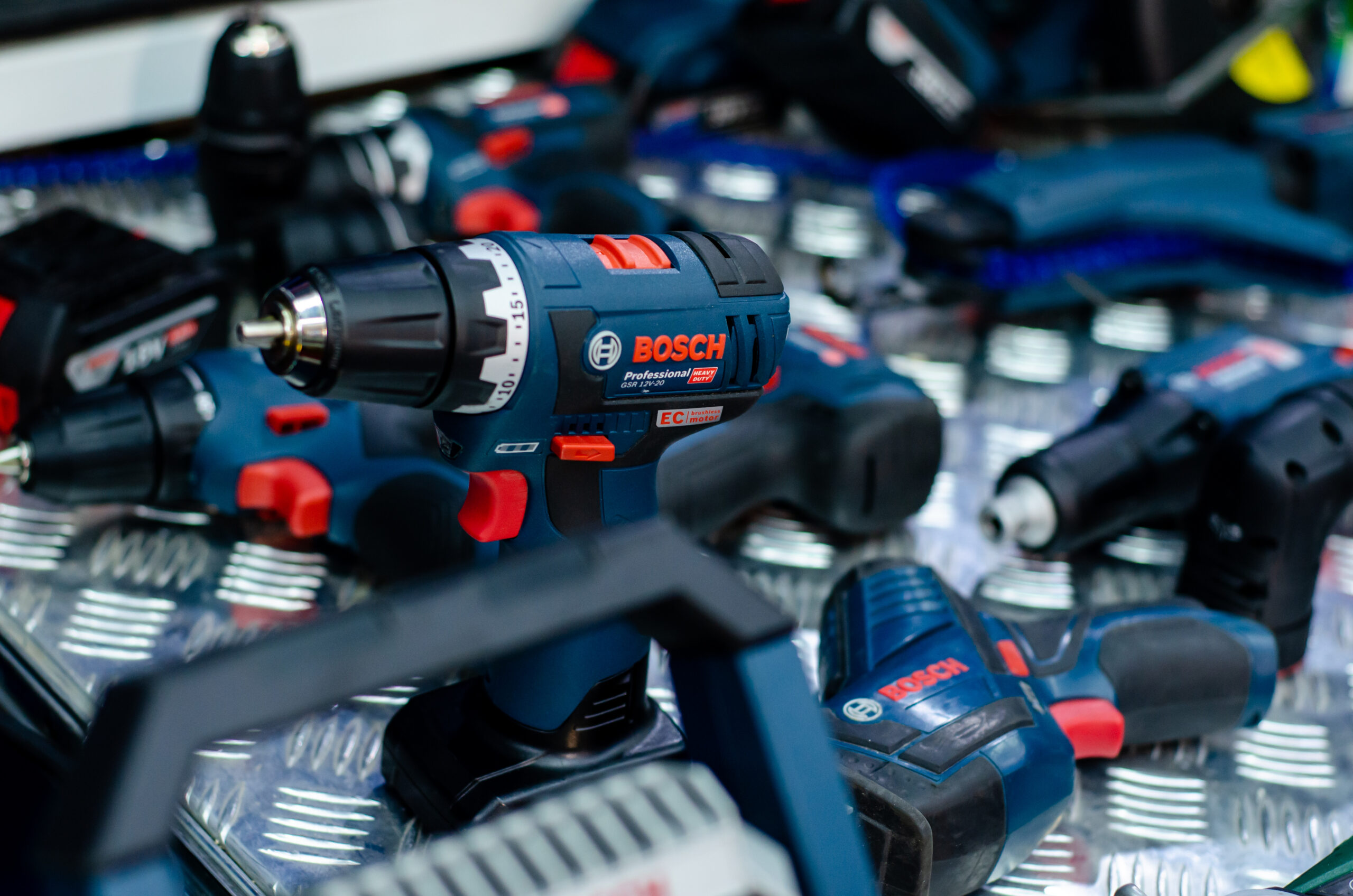
Meanwhile, Bosch Power Tools expanded its manufacturing footprint with the opening of a $130 million expansion at its Lincolnton, North Carolina, accessories plant and launched 60 new products at the 2026 World of Concrete trade show.
Globally, Bosch reported 2025 revenue of 91 billion euros ($102.8 billion), up from 90.3 billion euros in 2024. The company forecast sales growth of 2% to 5% in 2026 and an operating EBIT margin of 4% to 6%.
For distributors, the strategic significance lies less in Bosch’s annual revenue growth than in its evolving route-to-market strategy. By pairing the acquisition of a major HVAC manufacturing business with the purchase of a large regional distributor, Bosch has gained greater control over both product development and customer access.
The moves reflect a broader trend across industrial and building products markets as manufacturers seek closer relationships with contractors, dealers, and end users. For independent HVAC distributors, particularly in the western United States, Bosch’s expanding factory-direct model introduces a larger, more vertically integrated competitor with manufacturing scale, established brands, and company-owned distribution channels.
Do not miss any content from Distribution Strategy Group. Join our list.
Share this article:
