

Why This Matters to Distributors: Graybar’s message was clear: distributors no longer need perfect data or lengthy pilot programs to begin realizing value from artificial intelligence. The company’s leadership said the biggest barriers to AI adoption are not technology limitations but organizational change, process redesign, and a willingness to move quickly.
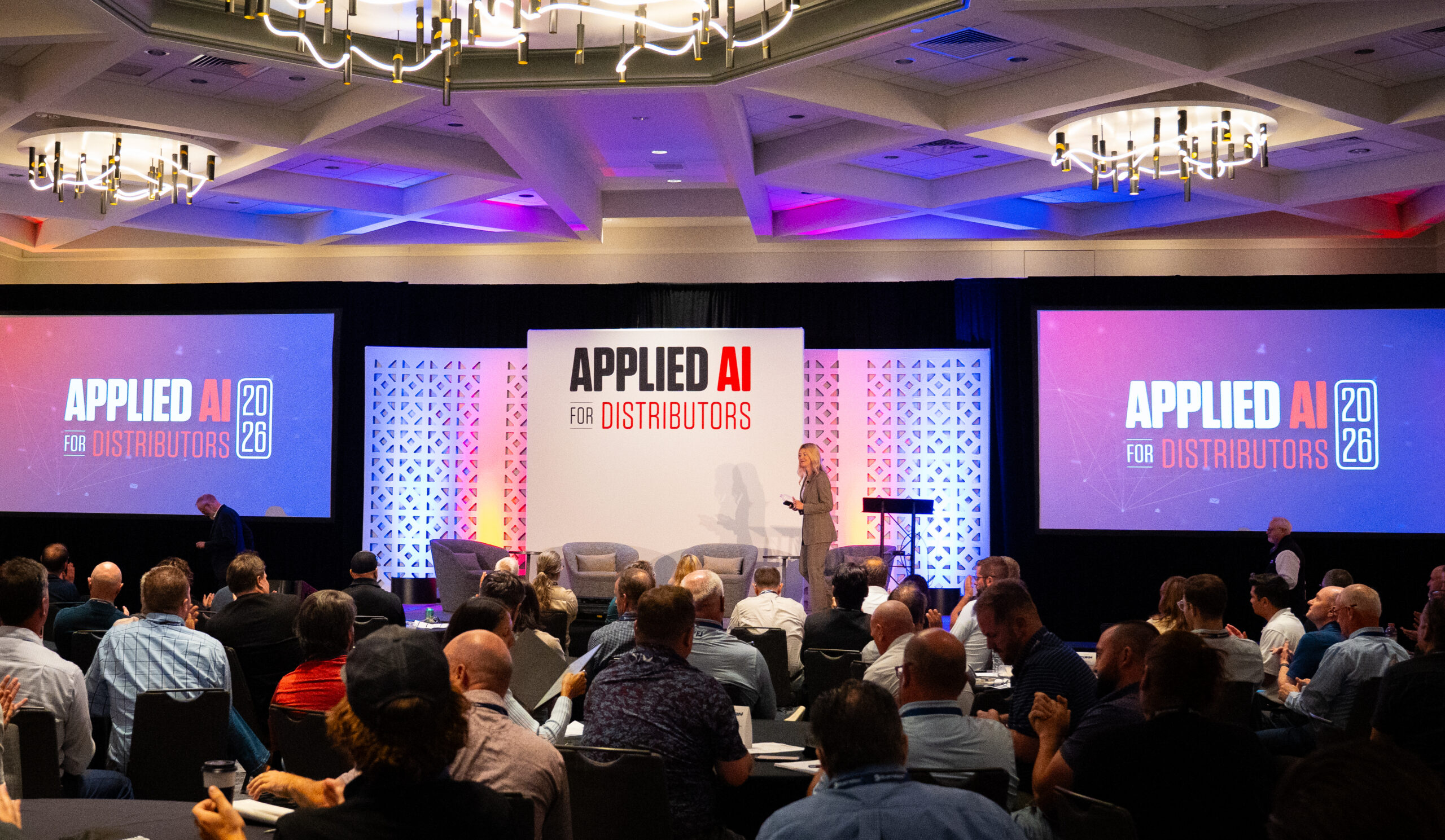
Graybar executives used the keynote stage at Distribution Strategy Group’s Applied AI for Distributors conference on June 23 to deliver a practical message to distributors exploring artificial intelligence: stop waiting for perfect conditions and start deploying applications that solve significant business problems.
Danna Stone, senior vice president of marketing, and Ed Fenton, vice president and AI and digital transformation officer, said the $12.9 billion electrical distributor is focusing its AI efforts on inventory management, workforce productivity, customer experience, and operational efficiency rather than chasing the latest technology trends.
“We are seeing a lot of return on investment” from inventory-related applications, Stone said, highlighting forecasting and inventory optimization as among the company’s most promising AI use cases.
The keynote opened with a discussion of the labor challenges facing both Graybar and its customers. Stone cited an estimated shortage of 350,000 construction workers and 75,000 electricians nationwide and said Graybar is looking at ways AI can help improve productivity and project execution.
“How do we use AI and all of our connectivity to improve their job experience, their project management, and lead to higher orders?” Stone said.
Fenton outlined Graybar’s AI roadmap, which includes demand forecasting, inventory optimization, transportation management, employee productivity tools, and customer-facing applications. He said the company is also investing heavily in training employees to use generative AI for research, data analysis, and workflow automation.
A key theme of the presentation was speed. Fenton said distributors should avoid becoming trapped in extended pilot programs and instead focus on moving projects into production where they can generate measurable value.
Among the examples he cited was an artificial intelligence-powered request-for-quote process capable of extracting information from customer documents and converting it into usable order information. The pilot moved from concept to deployment in two months.
“You don’t need your data to be perfect,” Fenton said. “You just need some of what’s in there to be meaningful enough.”
Fenton argued that many companies continue to overestimate technology challenges while underestimating organizational ones.
“The technology is not the problem,” he said. “It’s going to be your data, your processes and your people.”
The executives repeatedly emphasized that AI should be viewed as a business transformation tool rather than a workforce replacement strategy. Fenton said successful implementations require significant investment in change management and clear communication about how employees will use time saved through automation.
Stone echoed that point, stressing that technology will not replace the relationship-driven foundation of distribution.
“It’s still a people-to-people business,” she said. “Those relationships still absolutely matter.”
The keynote reflected a recurring theme throughout the conference’s opening day: distributors are increasingly moving beyond experimentation and focusing on practical AI applications that can improve execution, enhance customer service, and support profitable growth. For Graybar, that means using AI to augment employees, improve decision-making and create operational advantages while preserving customer relationships that remain central to the distribution business.
Do not miss any content from Distribution Strategy Group. Join our list.
Share this article:
