
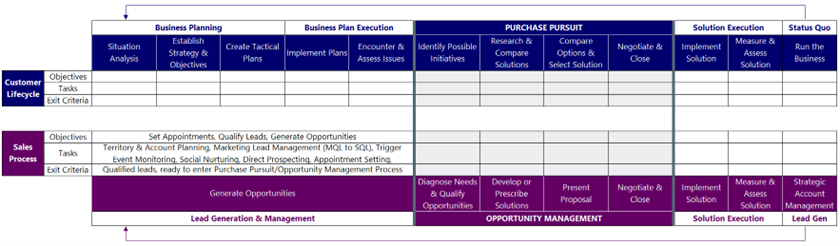
- The Supplier Selection Journey: This is the transactional path (not pictured above). A customer evaluates suppliers, selects one, places an order, stocks products, uses or resells them, and eventually reorders. After the initial selection, it’s a repeatable loop—sometimes self-service and increasingly digital.
- The Consultative Solution Journey: This is the complex path (example pictured above). A customer faces a challenge or wants to capitalize on an opportunity. They need more than a product—they need the right solution, often bespoke. This journey involves deeper discovery, solution design (co-created with the customer), pilots, full implementation, and post-sale support.
This article applies primarily to the Consultative Solution Journey and to distributors who sell implementable solutions in a buying/sales process with multiple decision makers (commonly referred to as “the complex sale”).
Introduction
No sugar-coating: B2B complex sales are a battlefield. Economic headwinds, cautious buyers, and endless approval chains have raised the bar for everyone. CEOs, senior sales leaders, and commercial excellence pros can’t afford hopeful thinking or recycled playbooks. To win—and keep winning—you need systems that cut through noise, align your organization, and arm your teams with the right strategies at every step.
This isn’t theory—it’s about real-world execution. In the rest of this article, I’ll share practical frameworks for making success in complex sales repeatable. To do that, I’ll use sales methodology elements from my upcoming book, The CoNavigator Method for B2B Sales Mastery, which I designed from over 16 years of studying top-performing salespeople to learn how they sell differently than the rest.
Operationalizing Success in the Complex Sale
- Earn meetings with the right stakeholders for the right reasons.
- Manage opportunities with discipline and buyer alignment.
- Grow accounts through documented value and strategic expansion.
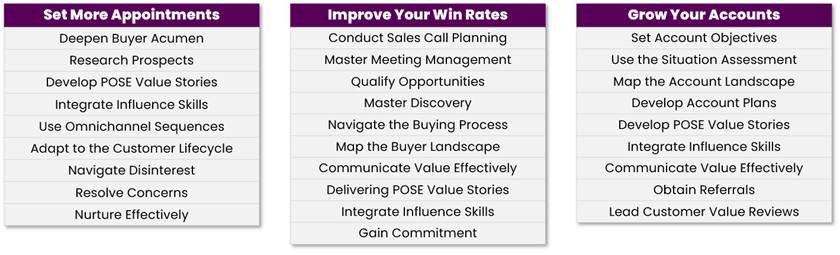
That’s why the next three sections focus on the core disciplines behind those outcomes: Set More & Better Appointments, Improve Your Opportunity Win Rates, and Grow Your Accounts. Each section reflects proven practices drawn from top performers and organized into a practical framework you can operationalize.
Set More & Better Appointments

Winning the complex sale starts with earning the right opportunities. You can’t win deals you don’t have. That’s why appointment setting belongs in this article—even though it’s technically part of new business development, not opportunity management.
In complex sales, the first conversation sets the tone for everything that follows. It’s not just about “getting a meeting”—it’s about earning time with the right stakeholders for the right reasons. That requires relevance, buyer acumen, and a disciplined approach to outreach. In some distributors, I recognize that most opportunities surface inbound, with a request from the prospect or customer. For those doing outbound prospecting, this section will be very relevant.
Here’s what’s required to source new business:
- Deepen Buyer Acumen: Get clear on your ideal customer profile and the roles you need to engage. Understand what each person cares about—their goals, responsibilities, and priorities—so your outreach is relevant.
- Research Prospects: Do your homework. Look for meaningful triggers like business changes, industry news, or strategic initiatives that make your outreach timely and valuable.
- Develop Value Stories: Craft short stories that connect a problem they may have with the outcomes you’ve delivered for others and the solution that made it possible. End with a simple question to gauge whether it makes sense to explore further. (POSE = Problem, Outcome, Solution, Explore.)
- Integrate Influence Skills: Persuasion should always be ethical and in the buyer’s best interest. Establish credibility, incorporate emotions, and justify with logic.
- Use Omnichannel Sequences: Don’t rely on one channel. Combine email, phone, voicemail, SMS, and social touches in a coordinated way to build awareness, spark interest, and start a relationship.
- Adapt to the Customer Lifecycle: Match your message to where the buyer is in their journey—whether they’re unaware of the problem, actively evaluating options, or planning implementation.
- Navigate Disinterest: When someone says, “not interested,” don’t assume it’s final. Learn whether it’s a real lack of need, a smokescreen, or just a timing issue, and respond with empathy, curiosity, and relevance.
- Resolve Concerns: When early concerns arise, acknowledge them, clarify what’s behind them, and address them respectfully. Confirm that your response works before moving forward.
- Nurture Effectively: Stay in touch with value, not “just checking in.” Share insights, resources, and ideas that matter to them until the timing is right.
Dot Connections: Appointment setting isn’t an isolated skill—it lays the foundation for everything that follows. POSE Value Stories introduced here reappear in opportunity management (for value conversations and commitment) and account growth (for expansion messaging). Lifecycle awareness and nurturing also connect to Customer Value Reviews later in account management.
Improve Your Opportunity Win Rates

Once you’ve earned the meeting, the real work begins. Complex sales involve committees, competing priorities, and internal politics. Winning isn’t about charisma or luck—it’s about disciplined execution across every stage of the buying process. Sellers must align with how buyers buy, uncover what matters most, and guide stakeholders toward confident decisions. This section covers the core practices that turn opportunities into wins.
Here’s what matters most:
- Conduct Sales Call Planning: Prepare for every interaction with clear, buyer-aligned objectives and a structured agenda. Make sure the meeting delivers value for the buyer while advancing the opportunity.
- Master Meeting Management: Lead meetings in a way that achieves mutual objectives, adds value, and maintains momentum. For example, schedule the next meeting during the current one and confirm alignment at the start and end of every meeting.
- Qualify Opportunities: Use a modern qualification approach that goes beyond budget and authority. Confirm that the opportunity is real, viable, and in the buyer’s best interest. (Qualification and discovery go hand-in-hand.)
- Master Discovery: Go beyond surface-level questions. Use a structured approach to understand the buyer’s current state, desired future state, and what’s needed to close the gap. This includes uncovering challenges, opportunities, impacts, needs, outcomes, and priorities (COIN-OP).
- Navigate the Buying Process: Learn what each stakeholder needs to feel confident moving forward at every stage. Satisfy that decision and exit criteria and confirm alignment before advancing.
- Map the Buyer Landscape: Identify all stakeholders, their roles, level of influence, and attitudes toward your solution. Build consensus and address risks early.
- Communicate Value Effectively: Frame your solution in terms of the outcomes and priorities that matter most to each stakeholder. Use clear, buyer-centric language—not product jargon. Align messaging with the buyers’ value drivers.
- Deliver Value Stories: Share short, relevant stories that connect a problem the buyer cares about with the outcomes you’ve delivered for others and the solution that made it possible. End with a question that invites dialogue.
- Integrate Influence Skills: When you know your solution truly fits, guide decisions ethically. Combine credibility, emotional resonance, and logical justification to help buyers act with confidence.
- Gain Commitment: Confirm that you’ve met all decision and exit criteria and resolved any remaining concerns. Then, recommend the next logical step and make it simple for the buyer to act. Clarity and ease are key—remove friction so moving forward feels natural.
Dot Connections: Qualification and Discovery are inseparable—one informs the other. Buyer Landscape mapping also ties directly to account planning later.
Grow Your Accounts

Winning the initial deal is only the beginning. In complex solution environments, growth comes from reinforcing value, expanding relationships, and earning referrals. Strategic account management ensures you protect what you’ve won and uncover new opportunities logically—not opportunistically. This section focuses on the practices that turn customers into long-term partners.
To grow accounts effectively:
- Set Account Objectives: Use data and logic to decide whether the goal for each account is to acquire, grow, retain, reactivate, or retire. This prevents wasted effort and focuses resources where they matter most.
- Use the Situation Assessment: Revisit the customer’s current state and desired future state to understand evolving needs and priorities. This helps you identify new opportunities and strengthen alignment.
- Map the Account Landscape: Identify all stakeholders, their roles, level of influence, and attitudes toward your company, your solution, and you. This insight helps you build consensus and anticipate risks.
- Develop Account Plans: Analyze what’s helping you move forward and what’s holding you back. Strengthen the drivers and reduce the barriers with a clear, actionable plan.
- Develop Value Stories: Create short, relevant stories that connect problems the customer cares about with outcomes you’ve delivered and solutions that made them possible. Tailor these stories for expansion opportunities and new stakeholders.
- Integrate Influence Skills: Maintain trust while guiding decisions ethically. Use credibility, emotional connection, and logical justification to help customers act with confidence.
- Communicate Value Effectively: Reinforce the outcomes you’ve delivered and connect them to future goals. Frame value in ways that resonate with each stakeholder based on their value drivers—not just in technical or product terms.
- Obtain Referrals: Ask for introductions and endorsements in a way that feels natural and helpful. Make it easy for customers to refer you by providing simple, buyer-friendly messaging.
- Lead Customer Value Reviews: Schedule structured conversations that highlight the value delivered, make your buyers and especially your Champion look good, combat recency bias (“what have you done for me lately” thinking), and uncover new opportunities for growth.
Dot Connections: Situation Assessment and Buyer Landscape mapping reappear here—what you learn in opportunity management informs account planning.
Three Principles for Making It Stick

- What gets asked about gets attention and focus. When leaders consistently ask about buyer alignment, discovery quality, exit criteria or other methodology frameworks in pipeline reviews, those behaviors rise to the top. Questions signal priorities.
- What gets measured gets done. Dashboards should track adoption of critical practices: sales call planning, meeting summaries, documenting COIN-OP, mapping buyer landscapes, confirming need and solution alignment, communicating value in the customer’s terms, satisfying exit criteria, and more.
- What gets integrated gets adopted. Training fades unless embedded into workflows. You can incorporate frameworks, models, and worksheets into your CRM for things like call planning, discovery, and meeting management. You can embed a qualification scoring system and make exit criteria satisfaction part of your gating for moving to the next process stage. Doing these and more will integrate your methodology into your daily rhythm and encourage adoption.
Closing Thoughts
Winning the complex sale isn’t about heroics—it’s about a system that works across the entire sales cycle. From earning meetings with the right stakeholders to managing opportunities with discipline and growing accounts through documented value, success comes from operationalizing these practices and embedding them into daily execution.
Distributors who master this approach don’t just win more, they win better. They build trust, deliver measurable outcomes, and become strategic partners to their customers. And when they reinforce these practices through leadership, coaching, and integration into workflows, they stop being “initiatives” and start becoming “the way we do things around here.” And then, you will have made sales mastery a part of your culture.
Let’s Connect
If you’ve had success with what I’ve shared here—or are navigating how to figure it out now—I’d enjoy hearing from you. As always, feel free to reach out. I’m always happy to share insights and discuss practical steps for improving results in complex sales.
Resources
- The Two Buyer’s Journeys in Distribution: A Practical Guide for Sales Leaders
- B2B Sales Methodology Differentiators: How Does Your Approach Compare to Top Performers?
- Connecting Dots to Build a High-Performing Sales Culture
- CoNavigator Sales Performance Accelerator Options

Mike Kunkle is an internationally recognized expert on sales enablement, sales effectiveness, sales training, sales coaching, sales management, and sales transformations.
He’s spent over 30 years helping companies drive dramatic revenue growth through best-in-class enablement strategies and proven effective sales systems.
Mike is the founder of Transforming Sales Results, LLC where he designs sales training, delivers workshops, and helps clients improve sales results through a variety of sales effectiveness practices and advisory services.
He collaborated to develop SPARXiQ’s Modern Sales Foundations™ curriculum and authored their Sales Coaching Excellence™ and Sales Management Foundations™ courses.
Mike's book, The Building Blocks of Sales Enablement, is available on Amazon, with others coming soon in 2026, starting with The CoNavigator Method for B2B Selling.